Showing posts with label beer trade. Show all posts

Tuesday, 28 April 2020

Locked down beer in pub cellars

Two locked down pubs in Churchtown, Southport.
The Bold (left) and the Hesketh (in the distance)
The order to close pubs, like many other businesses, was not unexpected, but the actual date came at very short notice. As a consequence, pub licensees had little chance to run down their stocks by reducing the size of their orders in the run-up to closure, meaning that the cellars of many pubs and bars have large quantities of unused beer, cider and perry. It is estimated that if they stay closed into the summer, 50 million pints will have to be discarded.

"It's a very sad waste of all the work and talent that goes into producing great beer," says Tom Stainer, CAMRA's chief executive. "People won't get to drink it and all those resources have been used up for nothing."

The shelf life of beers, ciders and perries depends on how it's produced, stored and served. Keg products, which include most beer sold in British pubs such as lagers, smoothflow beers (including a famous Irish stout) and ciders on fonts, can last for several months. Real ales and ciders, on the other hand, will only last for weeks, with any that have been already opened going off after a few days. All real ales, ciders and perries that had been opened at lockdown will probably have already been disposed of.

One suggestion is converting out-of-date beer into hand sanitiser by extracting the alcohol, which independent brewer Brewdog is already doing, but this is ultimately a very limited solution.

According to the BBC, supermarket alcohol sales increased by more than a fifth last month after pubs, cafes and restaurants closed.

"People are missing these things in their lives," says Tom Stainer. "It's not the biggest issue that the country is dealing with, but aspects of life like going to the cinema or café, or going for a pint, are something we treasure." 

Many breweries and distributors have offered to take back barrels at no charge once the lockdown is over, taking some of the financial pressure off licensees. However, more can be done, as Tom Stainer, explains:

“The Government needs to recognise the impact of an extended lockdown on [hospitality] businesses and confirm that the support package in place is extended until all restrictions are lifted. It must also consider a support package for pubs, breweries and cideries after they reopen, in recognition that it will take many months for businesses to recover fully.”

► This is one of a series of articles that I write for the CAMRA column in our local papers, the Southport Visiter and Ormskirk Advertiser.

Wednesday, 1 February 2017

Government ignores MPs' vote on PCA job

Adjudication without credibility
is worthless
I have written several times about the pub code adjudicator, Paul Newby, including:
The issue hasn't gone away, and the House of Commons has voted to "reopen the appointment process for the PCA (pubs code adjudicator)". While the minister from the Department for Business, Energy and Industrial Strategy admitted that pubcos were "flouting the code", the solution she suggested was for the licensees affected to use the PCA. A Tory MP added that the appointment complied fully with the code of practice for ministerial appointments to public bodies.

This is missing a significant point: that such an appointment should not only be compliant with the code, it must also appear credible to the people for whom the post has been created: in this case, pub licensees. In the debate, Lib Dem MP Greg Mulholland described Newby's position as untenable, explaining that there is a real possibility that he will undermine the intentions behind the pub code. He concluded: "All the people that the British Pub Confederation is representing in cases oppose Mr Newby, have no confidence in him and he will have to go. It will happen; it depends on if we see leadership from the Government or whether this has to drag on for another six months or a year, but this will not go away."

The longer this controversy continues, the more Newby's credibility in the job will plummet. The government's position should not be determined by a refusal to admit a mistake. I can only conclude that they don't want to lose face, but the risk of that will be greater as time passes. It would more sense to cut their losses now, accede to the MPs' vote, and reopen the appointment process.

Thursday, 5 January 2017

A small brewery far away ...

A choice of good real ales
in the Guest House, Southport
The decision of the Cloudwater Brewery of Manchester to cease brewing real ale seems to have evoked a variety of reactions from "Is this the beginning of the end of cask beer?" to "It's no big deal - move on." In the latter category you'll find Tandleman and the Pub Curmudgeon.

The doom mongers will always be among us, of course, often comprised of people who favour craft keg over real ale, sometimes despising CAMRA into the bargain: while they are fully entitled to their own preferences, their views should be taken with a large pinch of salt as they've an axe to grind.

I'm not the only person to have suggested that at some point the contradictory phenomena of ever more breweries and fewer pubs will collide - see my post from June 2016. One licensee I put this point to last year told me he thought that process had already begun, and pointed out that hobby brewers add to the problem by their ability to undercut those who need to make a living out of their breweries. 

So: apocalypse? Or damp squib?

Some breweries can cut production in the face of fierce competition, but not all. Brewers who either go to the wall or abandon real ale production will not necessarily be those who brew the least interesting cask beer. It is logical to assume that we will lose some good real ales in a process of consolidation that seems almost inevitable. Quite a few of us have been predicting this for a while, so I don't quite understand the apparent shock the Cloudwater decision has made in some quarters. They're a business, not a charity, and therefore have to make a profit - although even charities need to balance the books - and if their current business structure does not enable a profit to be made, then it is not surprising if they discontinue the product with the slimmest profit margin.

This will probably happen again elsewhere, but it would be incorrect to assume this means the beginning of the end for real ale. If the number of breweries producing real ale does decline, it will reach a new, lower point of equilibrium, a position that should be more sustainable in the longer term. The unfortunate consequence is that in the process we may lose some of our favourite beers.

While there is an overlap in the markets for real ale and craft keg, there is also quite a level of separation. Because of its longer shelf life, keg can be transported further and can supply small volume venues better than cask beer with its need for quick turnover. On the other hand, small real ale brewers tend to supply within their local areas. I doubt the two products will ever be wholly separate, but there can be circumstances when they'll meet different requirements.

Not an apocalypse, but not a damp squib either. Long term predictions about the beer market by people more knowledgeable than I am frequently prove wide of the mark. While pubs are still closing, micropubs, café bars and other small venues are opening in large numbers, and many do stock real ales; they may not be able to compensate for all the pub closures, but they should mitigate the situation, especially as they often go for locally-brewed real ales. Furthermore, many of the pubs that are closing were not real ale venues anyway; that's not to say such closures don't matter, but they won't affect real ale sales.

This decision by Cloudwater is part of the evolution of the beer market, and where we will end up in the long term is anyone's guess - and I use the word 'guess' intentionally.

Monday, 2 January 2017

Pub adjudicator reveals commercial interests

I've written on 10 June 2016 and 30 November 2016 before about how the pub code adjudicator (PCA), Paul Newby, has financial interests that could compromise his independence; my post in June goes into detail about his investments. Mr Newby has decided to publish full details of his financial involvement in Fleurets in order to answer charges of a conflict of interest: the details are in the Morning Advertiser.

A spokesperson for the PCA has said: "These pre-existing interests do not call into question his ability to carry out his responsibilities. This is a view that has been upheld by the commissioner for public appointments. There is no direct link between the ownership of shares and loans and the decisions Mr Newby is required to make as the adjudicator. He gains no direct benefit from future instructions to Fleurets or the outcome of any particular case involving the company and there is no incentive for him to act in any particular manner."

Does that answer all the criticisms? In my opinion, the use of the word 'direct' twice in this statement leaves questions unanswered. It could be argued that a decision he may make in a pubco's favour could benefit him indirectly. After all, he doesn't want a company in which he has a sizeable stake to lose value, thus jeopardising repayments to him. If I had money invested in a company, I'd want it to do well. Greg Mulholland MP has asked why someone with a legal background wasn't appointed, a suggestion I made in a comment to my post in June; such an appointment would not have been touched by this kind of controversy.

For all I know, Mr Newby may well be a man of integrity who is committed to doing his job fairly; I certainly hope so, and the increased openness is to be welcomed. However, the question of how he is perceived remains unanswered, so I'm inclined to doubt that all the critics will be satisfied.

Wednesday, 30 November 2016

Compromised pub code adjudicator to keep job

They say justice is blind.
Deaf too, in this case.
wrote in June about the genuine questions over the suitability of Paul Newby for the post of pubs code adjudicator (PCA): "It is not hard to see why Newby lacks credibility among the people who would have to rely on him to adjudicate on disputes with their landlords, given that the latter are major customers of the company in which he has a big shareholding and which owes him a lot of money."

Iain Wright MP, chair of the Business, Energy and Industrial Strategy (BEIS) committee, has just sharply criticised the government for its refusal to reopen the appointment of the post, having expressed the committee's concerns about Newby's suitability to the Secretary of State for BEIS Greg Clark in July.

Clark belatedly replied to the BEIS committee this month, four months later: "The appointment process was run in accordance with the code of practice for ministerial appointments to public bodies. As part of the appointment process, the panel considered whether Paul Newby has conflicts of interest that might call into question his ability to do the job and concluded he did not." So that's all right then. Such a bland and uninformative reply could have been cobbled together in five minutes, so why did it take four months? My guest it's because Clark hoped the issue would have faded away by now.

If you want to judge this dispute for yourself, the facts of Newby's past active involvement and current financial stake in pubcos are in my previous post. Iain Wright emphasised that they are not doubting Paul Newby's personal integrity or suitable experience; rather they are saying that it's not enough to be be squeaky clean - it's essential to be perceived as such. Licensees approaching Newby for an impartial adjudication will not be reassured by Clark's curt dismissal of any valid concerns.

In my previous post, I asked whether this all might be a gigantic cock-up. I now think the answer is 'no' and am inclined to believe that pubcos were persuaded to go along with the creation of this post on the basis that the PCA would be a sympathetic appointee.

Monday, 14 November 2016

Beer 'to rise 30p a pint'

According to The Sunday Times, the price of a pint could rise by as much as 30p next year. The reasons given include:
  • The EU vote, which has driven inflation and increased supply costs.
  • Massive increases in business rates.
  • The national living wage.
  • Auto-enrolment pensions.
  • The apprentice levy.
One estimate is that overheads may rise by 4%. Youngs, for example, have said that its costs are likely to rise by £1.8 million. Both the Association of Licensed Multiple Retailers and the British Beer and Pub Association have told the government that transitional relief for business rates is needed.

I'm doubtful that such help will be forthcoming. A price rise of 30p would constitute an 8.67% increase on the average price of a pint in the UK, currently £3.46. Given that since 2010, austerity has meant that millions of British workers have had pay rises of 1%, none at all, or even pay cuts, such an increase will inevitably have an adverse effect on pubs, probably accelerating pub closures. Let's hope the government listens to the industry's submissions, but best not hold your breath.

Thursday, 27 October 2016

Sidestepping the Code

In July, the Pub Code finally came into force allowing pub tenants to ask their pubco for a market rent only (MRO) deal, which would allow them to buy beer on the open market in exchange for paying a commercial rent on the premises. All well and good, except that pubcos, most of which have accrued a mountain of debt (basically because they're rubbish capitalists), are not playing ball.

One tenant reported that when he requested a change to an MRO tenancy, as is his legal right, the rent offered was double, which would have left him much worse off as the rent would have been nearly double the national average for free-of-tie rents. Punch have consistently refused to explain the figure.

Another tactic is the insist on a new contract, although it is much simpler and cheaper to vary the existing one. Thousands of pounds are then demanded in stamp duty, legal fees, and a premises licence fee, whatever that is. Other charges added to the switch to MRO mean some licensees have been expected to find nearly £200,000 up front.

It's a good job we've got the Pubs Code Adjudicator then, except that there are serious doubts about Paul Newby's impartiality (see my earlier post about him). The first referrals have arrived on his desk, but as such referrals costs £200 each plus legal costs, which can add up to thousands, licensees are not going to go down this path lightly.

Punch say they are "open to negotiation at any rent event". If they were prepared to enter negotiations in good faith, then licensees wouldn't be turning to the adjudicator. The fact that some of them are shows that being open to negotiation is by no means the same as being prepared to negotiate.

Monday, 13 June 2016

Beer Day Britain 2016

I wrote this for the local paper, the Southport Visiter; most of the info came from the Beer Day website. Personally, I don't need a specific Beer Day, but I have no objection to this initiative.

Beer Day Britain is on Wednesday 15 June, the date when the Magna Carta was agreed in 1215. Article 35 states: "There shall be standard measures of wine, ale, and corn (the London quarter), throughout the kingdom." To be mentioned in one of the most significant legal documents in our history shows how important ale was in England at that time. It is in fact an early example of a weights and measures policy and while we do not know what the legal measure for beer would have been at that time, it probably was not the pint.

From the 16th century English (and later British) ships spread the taste for beer far and wide. Many styles of beer invented in Britain are now brewed regularly around the world, including pale ale, India pale ale, mild, brown ale, stout, porter, imperial Russian stout, and barley wine.

Visitors to the UK often view pub culture as an important part of our identity and a trip to the pub for beer and typical pub food such as fish & chips is in the top five activities they want to do. Beer is also an important part of our economy; every year, the British Treasury receives £22 billion from the brewing and pub industries.

The idea of Beer Day Britain is for people to drink a beer, ideally in the pub, and celebrate our national drink. Join in by raising a glass and saying "Cheers to Beer" at 7pm on 15 June. To find out more about Beer Day Britain, click here.

Friday, 10 June 2016

Who will adjudicate the adjudicator?

It doesn't look as though the anger over the appointment of Paul Newby to the new post of Pubs Code Adjudicator (PCA) by the BIS secretary Sajid Javid is likely to dissipate soon. Newby has conceded that he has worked mainly for Enterprise, Punch and Marstons over the last five years, but either does not, or chooses not to, understand that his new role could bring him into conflict with his former paymasters. However, this matter goes further than that.

Newby was a director of Fleurets, which describes itself as a 'UK business property valuers and surveyors specialising in pubs, hotels, restaurants, licensed property and business properties for sale and to let.' He resigned as director a couple of months ago, but still owns an 11.52% stake in the company. The company hasn't been doing well in recent years and the directors and their spouses had to make secured loans to it of £2.5 million, with further unsecured loans of more than £600,000. We don't know the size of Newby's loan, but it is clear that he still has a major financial interest in Fleurets' survival.

Pub companies pay Fleurets more than a £1 million a year for its services, and should Newby decide to adjudicate against them, they may well take their custom elsewhere; Fleurets would then collapse, taking his investment with it. LibDem MP Greg Mulholland's assertions that Newby would not be independent as PCA have been branded a 'disgraceful set of slurs' by BIS minister Anna Soubry, but her mock-indignant huffing and puffing does not address the fact that Newby stands to lose a lot of his own money if pubcos decide to punish his company for any adverse decisions he might make in his PCA role.

It is not hard to see why Newby lacks credibility among the people who would have to rely on him to adjudicate on disputes with their landlords, given that the latter are major customers of the company in which he has a big shareholding and which owes him a lot of money. Is this a gigantic cock-up? Or were pubcos persuaded to accept the creation of the Pubs Code on the basis that the adjudicator would be someone whom Sir Humphrey Appleby would describe as 'sound'? Either way, if the government is serious about the code, it needs to back down and appoint another, more obviously independent, person to the job.

The only surprising thing about this whole affair is how the government has walked blindly into a controversy that was both foreseeable and avoidable.

Main sources: Private Eye and The Morning Advertiser.

Sunday, 7 February 2016

Lighten up! It's only a joke!

Jane Peyton has written an article in the Morning Advertiser with the title: 'Beer sexism: It's spelled ale not male'. I know this is old ground, but the fact that a woman still feels the need to write such an article indicates the problem hasn't gone away. No surprise there, really.

As a union rep, my duties used to include Equal Opportunities, later referred to as Equality and Diversity. I was also selected to be an Equal Opportunities trainer by my employer, and as such I ran one-day training courses that all staff had to attend. The question of jokes inevitably raised its head, mostly jokes about gender, race, and sexual orientation. I found the most difficult people to persuade were young males; women and older males tended to get the point.

Time and time again, I was told: "No one on our section minds". I'd reply by pointing out that if people didn't actively object, that didn't mean they weren't offended or upset, and in open plan offices, it's not just your immediate colleagues who will hear. And anyway, why would you want to behave in a way that upsets your colleagues? Even if you don't agree with why they're upset?

That last point is the key one. It's a matter of showing respect to others, accepting that they may have sensibilities you don't share and a different sense of humour from you. The Equal Opps training days I ran weren't necessarily intended to win hearts and  minds - you can't convert a sexist pig in a day - but to improve behaviour. In the training sessions, if no other argument worked, I would ask sceptical young lads: "Why would you want to upset someone who can put in a formal complaint about you - and win?"

There is, of course, no system of complaints against brewers' sexism, but the point about not upsetting people even if you don't accept their reasons for being upset should be very important to a businessman who wants to sell his products: why alienate 51% of the population? The final sanction for the brewer is not a formal complaint, but women not buying your products. Don't you want to sell more beer?

I've never seen beer names and pumpclips that make 'funny' degrading references to race, religion, disability or sexual orientation, so why do brewers pick on women? Mainly because they think they can get away with it. If certain brewers aren't persuaded by the principled objections to sexist 'jokes', then they should at least care about their sales. If you think your laddish jokes are more important than your profits, you're not much of a businessman. And don't forget: even 'lads' grow up in time, usually more quickly than sexist brewers, from what I can see.

As for any males who agree with what I've written, I'd ask you to do what I do: hit them in the pocket by not buying such beers.

In this article, I have deliberately referred to 'businessmen', mainly because I'm certain that all of those behind such juvenile humour are male.

Thursday, 3 December 2015

In the Meantime ... divorce

What's a poor, spurned craft brewery to do? London craft brewery Meantime was taken over by SABMiller in May this year. Like most marriages, SABMiller promised to love and honour its new craft bride, assuring its customers that Meantime wouldn't be forced to change and would still be allowed to get on with doing what it did best: loyal customers need not fear.

But, heartbreakingly, SABMiller has found a new love in AB InBev, and not only is the honeymoon period with Meantime over, but divorce papers have already been served. AB InBev is looking to sell Meantime, as well as brands such as Grolsch and Peroni. They promise to look after these brands until the decree absolute comes through, but the question of maintenance afterwards must be a worry, especially for the staff at Meantime brewery. Unlike when they sold out to SABMiller, they won't have any say over who owns them in future, which must be unsettling to say the least.

Selling out to a big beer corporation must be a temptation for the owners of a highly successful small brewery, but the problem is that you are instantly converted from a company to a brand, and brands are no more than commodities to bought and sold like any other.

You'd think the example of Sharp's, taken over by Molson Coors who subsequently moved all the brewing of bottled Doom Bar hundreds of miles north, would have rung a few warning bells, but obviously not.

Sunday, 7 September 2014

Do you want the good news first?

According to the British Beer & Pub Association (BBPA), the number of breweries in the UK has risen 188% since 2000: there are now 1,442. Long gone are the days when a reasonably well-informed beer drinker was familiar with the names of most breweries; nowadays when I travel elsewhere in the UK, I almost always find local breweries I've never heard of. Increased choice is of course good news in general but, contrary to what non-real ale drinkers tend to assume, that doesn't mean that every beer is excellent or that every real ale drinker likes every beer. Despite that, I'd say that overall things are looking good for drinkers who enjoy variety.

However, in the spirit of the beer glass being half empty, there has to be a note of caution. BBPA figures, which are based on tax revenues, show that alcohol sales fell by 1.7% in the year ending in 2013, and by 18% since 2004. There must come a time when declining alcohol sales will curb the increase in the numbers of breweries, and probably lead to some closures; I made a similar point last Wednesday when discussing the related issue of pub closures.

Are the anti-alcohol zealots pleased? Fat chance! As I reported on 14 August, the All-Party Parliamentary Group on Alcohol Misuse (APPG) has come out with a document calling on all political parties to commit themselves to 10 measures to minimise alcohol-related harm in the UK. Despite the official sounding title, this is a group of "self-appointed busybodies with no official status" (to use Curmudgeon's words) who are attempting to influence the manifestos of all parties in the direction of more restrictions.

But it's even worse than that. As Xopher wrote in the comments to my post of 14 August:
  1. The secretariat for the APPG was provided by Alcohol Concern who researched the report.
  2. The APPG secretariat and the printing costs for this report were funded by Lundbeck Ltd.
  3. Lundbeck is a pharmaceutical company which paid for Alcohol Concern's alcohol harm map and report (The Case For Better Access To Treatment For Alcohol Dependence In England). 
  4. Lundbeck sells alcohol dependency drugs in the UK and across Europe.
The fact that Alcohol Concern is itself almost entirely financed from public funds completes the circle whereby the government squanders our money to pay a pressure group to lobby that selfsame government. Using the mechanism of the APPG looks suspiciously like a way of trying to obscure the audit trail. 

And is no one on the APPG bothered about the vested interest that Lundbeck has in helping to steer UK official policy in a way that would boost their own profits? Obviously not.

Enjoy the brewery boom while it lasts.

Friday, 4 July 2014

Keep your hands to yourself!

A licensee, yesterday
Politicians can't resist meddling with pubs, can they? You'd think with the UK trying to act as the world's police force (or at least police dog to the world's police force, the USA), they'd have better things to do with their time, wouldn't you? Apparently not.

So what are they up to now? Changes are proposed to the Licensing Act 2003 that, if passed by Parliament, would oblige pubs and bars to display the price of the smallest unit of alcohol available “in a menu, price list or other printed material available on the premises”, and if customers doesn't specify a measure, to make them “aware these measures are available”. So when I go into my local and just say, "I'll have a Sandgrounder, please", bar staff would be committing an offence if they didn't tell me that it was available in thirds and halves, even though they know I mean a pint.

The trade is up in arms because:
  • There was no meaningful consultation with them.
  • The potential for entrapment by Trading Standards if the smallest unit wasn't offered when an officer hadn't specified a measurement. How easy would it be for busy bar staff to fall foul of the law?
  • Licensees would face extra costs, such as reprinting all their menus and price lists, and ensuring all staff are trained.
  • The proposal lacks detail - essential with legal requirements - and the timescale is ridiculously short (the implementation date would be 1 October).
  • The sector is already overburdened with regulation.
In relation to that last point, this proposal gives the lie to the government's claim that it wishes to lighten the burden on business, reduce the dead hand of over-regulation, et cetera ad nauseam.

I wonder whether a person found guilty of some alcohol-related offence could try to deflect the blame by saying he or she wasn't advised about smaller units. Not much of an defence in my opinion, but that wouldn't stop some trying it on and causing trouble for a licensee.

Quite simply, this proposal doesn't treat drinkers like adults. I just wish that politicians would stop patronising us and let us make our own choices.

You can tell the World Cup's over, at least as far as England is concerned: they're back to bashing pubs again - see my post of three weeks ago.

Monday, 30 September 2013

More breweries in a declining market

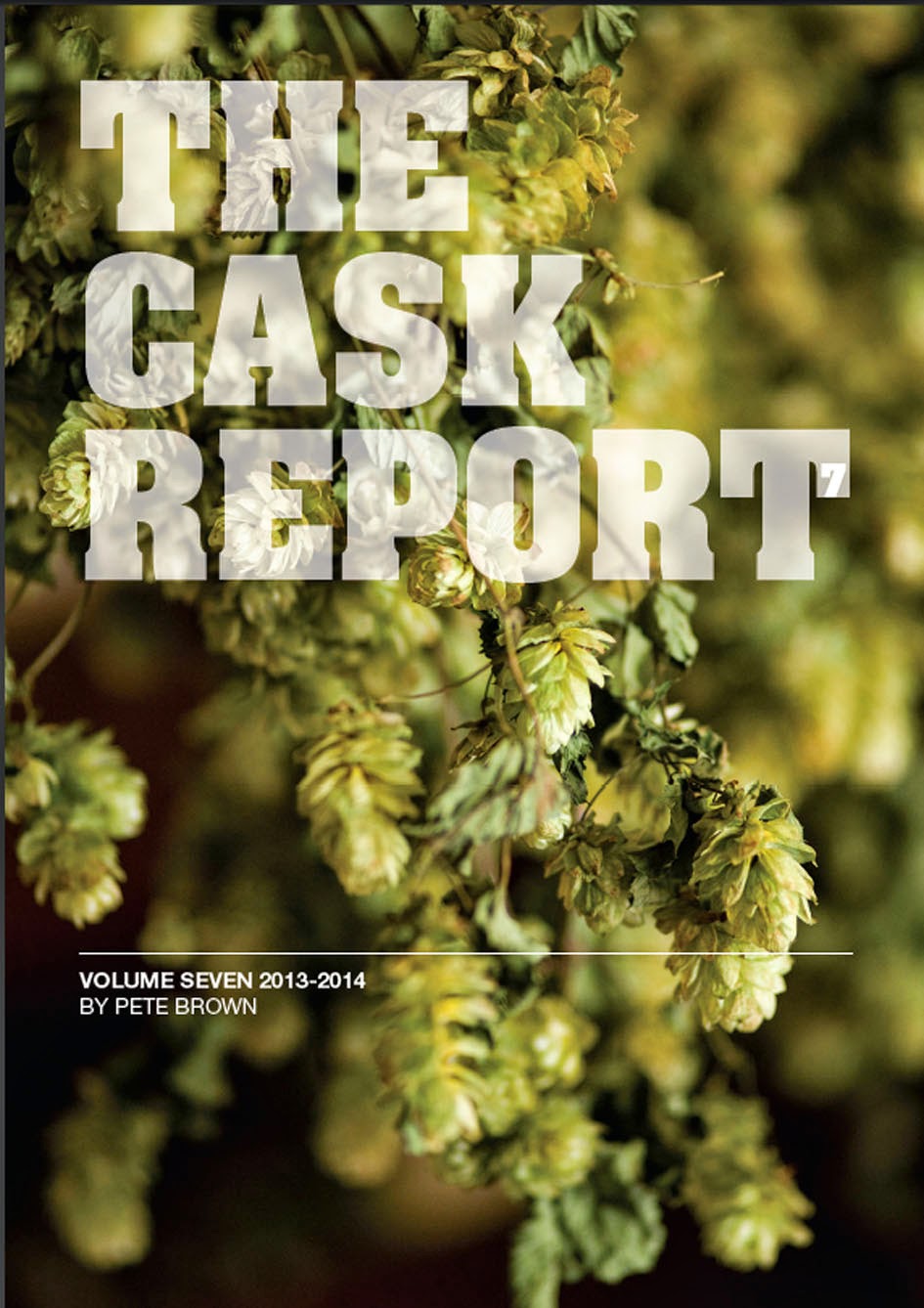
According to the annual cask ale report compiled by Pete Brown, cask ale outperformed the total beer market by 6.8%. So party time? Er, not quite. What actually happened is that the total beer market declined by 7.9% in 2012, but real ale declined by only 1.1%. While it's good that real ale is surviving the recession better than keg beers and lagers, it's still in decline. The market share of real ale is increasing merely as a percentage of the total, declining ale market: it is now 55% of the total - the remaining 45% being smooth and keg. I'm not sure how an overall decline can be seen as good news, even if it is a lesser decline than other beer types; the CAMRA newspaper, What's Brewing, is to my mind unjustifiably optimistic.

At the same time, the latest issue of the Good Beer Guide shows that the number of breweries has increased to more than 1,150, with almost 190 opening last year. The contradiction of ever more breweries chasing a declining market cannot continue indefinitely, and the first casualties are likely to be breweries. Real ale nibbling into keg and lager sales will only postpone this outcome, unless the decline in real ale sales rectifies itself. I can't see this happening until the economy improves, assuming it does, and people's job security and standards of living begin to recover, which is unlikely in the near future.

I doubt there would be a big bang of breweries going bust; more likely there would be a gradual loss of smaller, less profitable ones after a struggle to find outlets for their products. People don't tend to abandon their dreams lightly, so I'd expect it to be a slow process. I hope I'm wrong and we do get more of a recovery.

Sunday, 27 May 2012

Make Beer, Not War ...

Too good to hurry?
... was for some time the slogan in this blog's header, so I was really pleased to learn that trade between India and Pakistan, which is almost non-existent (1% of India's exports go to Pakistan and 1.7% of Pakistan's to India), is to be given a boost by a Pakistani brewery, Murree Brewery, which was founded in 1860 to slake the thirst of the soldiers and civil servants of the British Raj. Murree is preparing to export its beers to the growing beer market in India, a market which was firmly closed to them after the Partition in 1947. Moslems in Pakistan are not allowed to drink by law (well, not officially anyway), so Murree has relied on supplying the small non-Moslem population of Pakistan and on exports. Considering the troubled history between these two countries since 1947, greater trade can only help increase mutual understanding and trust, and I can't think of a much better way than over a beer.

The ruins of the original
Ghora Galli Brewery today
As well as exporting the beer into India, they're also planning to brew it under licence there, and Murree hopes to make inroads into the UK market with beer brewed in the Czech Republic. The beer will almost certainly be a lager-style offering, although it may gain credibility in the UK by being brewed under licence in the Czech Republic, the original home of pilsner beers. Murree have their advertising slogans lined up already: in the nineteenth-century they used to urge people to "Eat, drink and be Murree." Today they plan to encourage us to "Have a Murree with your curry." If I see it anywhere, I might even give it a try.

You can read the full story here.