Showing posts with label pubs. Show all posts

Tuesday, 29 June 2021

The Beer Den in Crossens

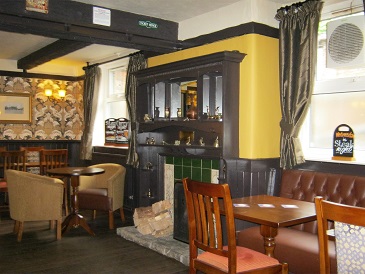
The recently-opened Beer Den in Crossens
Great news: Southport has a new real ale micropub! The second branch of the Beer Den opened in Crossens in northern Southport on Wednesday 19th May. By 4.00 p.m., there was already a queue of thirsty customers waiting for the doors to open. This is hardly surprising, seeing that Crossens has been a beer desert since the Plough was demolished.

Converted from a shop, the single roomed bar is attractively decorated with a wood panel effect up to waist level and the bar in the far corner. Rick Parker and Debbie were on hand to welcome everyone through the door, and very soon there was a happy buzz of conversation among the many customers who turned out.

Both branches of the Beer Den (the first is nearer the town centre on Duke Street) are run by the Parker Brewery based in Banks. There were three handpumps serving two Parker beers, Saxon Red Ale and Viking Blonde, and a guest beer from Bury's Deeply Vale Brewery, Optimum Best Bitter. Our group found all the real ales to be in excellent condition.

Goose Eye Midway Session IPA, Lowenbrau and Camden Hells Lager were available on tap, and other drinks included the usual spirits, with some specialist gins, wine and a choice of bottled beers in the fridge.

It is good to see a micropub open in a residential area not previously served by any pubs and bars at all. Drinkers in Crossens have previously had to travel to Marshside, Churchtown or even the town centre for a sociable drink and a chat outside the home with friends and family - or even people you don't yet know, as happened to me on opening day.

The Beer Den is at 125 Rufford Road in Crossens; opening hours are:

Monday: Closed

Tues-Thurs: 4-10pm

Fri & Sat: 2-10pm

Sunday: 2-9pm

You can find it on Facebook and the brewery's website is here. If you get hungry after a few drinks, there is a takeaway next door.

► 
This is one of a series of articles that I write for the CAMRA column in our local papers, the Southport Visiter and Ormskirk Advertiser. Older articles on local pubs are here.

Saturday, 3 April 2021

Are COVID-19 passports the answer for pubs?

As we approach the reopening of pubs on 12 April for outside service, a late complication has been thrown into the mix with the suggestion that pubs and bars may choose to operate a COVID-19 passport policy so that customers could show that they'd had either a vaccination or a negative test. As the possibility of COVID passports has been discussed for months, I don't see why the government is raising the matter only now - so soon before reopening.

Pubs need more notice to help them plan staffing levels and how much drink to order, especially after a year of lockdowns. The British Beer and Pub Association (BBPA) has calculated that up to 87 million pints of beer - equivalent to £331m in sales - will have been thrown away in the UK as a result of COVID lockdowns.If pubs operate a passport policy, whether voluntary or mandatory, they would have to pay for a bouncer on the door to check passports before admitting people. Many pubs, smaller ones in particular, would struggle to pay for the extra staff member, especially after a year of lengthy closures interspersed with restricted trading due to COVID regulations.

The BBPA has expressed concern that passports will lead to confrontations between disappointed customers and staff. While this is distinctly possible, my view is that such incidents will be more likely if passports are voluntary because licensees will not be able to argue that they are simply enforcing the law.

Kate Nicholls, chief executive of UKHospitality, said: "It is crucial that visiting the pub and other parts of hospitality should not be subject to mandatory vaccination certification. It is simply unworkable, would cause conflict between staff and customers.”

Both organisations have pointed to the millions spent by the sector on ensuring a safe environment for customers and staff, and to the fact that, when pubs could open, no surges in infections have been linked to them.

CAMRA is opposed to vaccine passports because pubs have suffered badly over the last twelve months and could do without unnecessary restrictions. Furthermore, passports could prevent younger drinkers going to pubs while they wait for the vaccine rollout to reach their age group.

► This is word-for-word the article that I wrote for the CAMRA column in two local papers, the Southport Visiter and the Ormskirk Advertiser. The following is my own opinion which did not appear in the papers.

In relation to the idea of CV19 passports, I am frequently hearing claims, including from one member of my own CAMRA branch, that insisting on them before entry to pubs would be a form of discrimination. This use of the term 'discrimination' usually refers to prejudice in thought or action against people for irrational reasons such as skin colour, nationality, gender, sexual orientation, disability, religion, and so on. A suggestion of discrimination is potentially a serious accusation which needs to be examined.

I am a committed equality and diversity person and in my last job, there was a time when I was simultaneously an equal opportunities trainer for my employer and an equality and diversity spokesperson for my trade union. I cannot see how any licensed premises that did refuse admission because the customer didn't have a passport would be guilty of any breach of discrimination laws, no more than if admission was refused on, say, dress code grounds. If introduced now it would, for example, certainly prevent younger drinkers from being able to enter pubs, but not because of irrational prejudice, but as a health & safety measure to try to combat a pandemic that has so far killed 2,840,000 people worldwide. Measures to combat disease are not irrational, so to insist upon them cannot be described as discrimination, even they do disadvantage certain sectors of the population.

That is my view on the principle, but there are a number of practicalities that would have to be addressed before a passport scheme could be implemented:


• The potential for confrontation when people are refused admission must not be underestimated. 
• Confrontations would be more likely if the scheme were voluntary because licensees could not argue that a passport was required by law.
• Some pubs would struggle to meet the cost of an extra member of staff on the door to check passports before letting people in.
• Timing: when would be the best time to implement a passport scheme to ensure that as few people as possible were disadvantaged?
• How do we deal with those who cannot have the vaccine for genuine medical reasons? (In my view, this doesn't include a dislike of needles)
• Any new CV19 variants against which existing vaccines were inadequate would instantly make the passport scheme pointless. 
• We would need adequate measures to prevent forged passports. 
• Far from encouraging confidence in pub-going, the scheme may well deter some drinkers from returning to the pub. 

I've not heard of any surges in infections that have been linked to pubs and bars. Indeed, every one I visited during the gaps in lockdowns was very conscientious in administering and enforcing the official guidance, so we have to question whether the cost, effort and practical difficulties involved in such a scheme would be worthwhile. Although I don't have a problem with the principle of CV19 passports, I consider that the difficulties I've referred to and the potential consequences render the idea a non-starter.

Sunday, 21 February 2021

Hospitality: no further room for mistakes

I've been told the pandemic may have
already killed off the Belvedere in Liverpool
The constant refrain we have heard from the government during the pandemic is that they are 'following the science', and yet sometimes that is the last thing they appear to do. To give just one example: the insistence that the UK must be open over the whole Christmas period, until a last-minute U-turn limited it to one day. A pandemic cannot be defeated by breezy optimism and a conviction that the British Bulldog spirit will see us through.

The hospitality industry has had many restrictions - some reasonable, some less so - and shutdowns imposed upon it, often at very short notice, causing huge amounts of avoidable waste. It is impossible for pubs and restaurants to order adequate stocks of food and drink to meet customers' requirements while simultaneously be ready to close at the drop of a hat. Food and beer are perishable – real ale particularly because once the cask is opened, it must be consumed in days, not weeks.

A survey across the hospitality sector by Lumina Intelligence found that 67% of businesses wouldn't be able to reopen if the sale of alcohol was banned, with 19% stating that such a restriction would have an extreme impact upon their businesses. Furthermore, the British Beer & Pub Association has found that limiting reopening to outdoor service would leave 60% of pubs closed while causing an estimated drop in turnover for the sector of £1.5 billion compared to normal trading.

Some parts of the national media haven't helped by demanding dates for the lifting of lockdown, with one national paper proclaiming “Free by Summer”. Unjustifiably raising hopes only causes extreme disappointment if they cannot be fulfilled, and is likely to encourage further breaches of restrictions as people conclude that our leaders don't have coherent plans.

Restrictions such as requiring pub customers to have a 'substantial meal' with their drinks, and then debating in public as to whether a Scotch egg constituted one, gave the impression that policy was being made up on the hoof.

Hospitality is rapidly approaching a 'make-or-break' situation; after nearly a year there is now little room for yet more wrong decisions to be made. Let's hope that measures are proportionate and considered, and not based on back-of-the-envelope science and knee-jerk reactions.

Thursday, 11 February 2021

Pubs with no beer? You cannot be serious!

The fine frontage of the Crown
on Lime Street, Liverpool
It is rumoured that as lockdown eases, the government may allow pubs and bars to reopen without the 10.00 pm curfew and with no requirement to have a substantial meal. This all sounds quite hopeful - until you hear that they are also considering banning any alcohol sales.

The chief medical officer Chris Whitty is concerned that drinking alcohol will destroy any attempts to maintain social distancing. This is not a scientific judgment: it is simply an opinion, and it's not one that is borne out by my own experiences last summer. Every pub I went into observed all the rules and required their customers to do the same. Sometimes I forgot and more than once I was ordered by bar staff: “Oi, Neville! Go back and sanitise your hands!”

If pubs can't serve alcohol, there is a greater danger of the virus spreading in unsupervised conditions such as when groups of friends gather in one house, not for a party as such, but just to have a few drinks from supermarkets. Such behaviour will continue if reopened pubs can sell only non-alcohol drinks: very few regular pubgoers will return just for tea, coffee and soft drinks.

Kate Nicholls, Chief Executive of UKHospitality, tweeted: “Reopening in name only inflicts irreparable damage on hospitality as we saw October to December with restrictions with little meaningful impact on health or harm, pushing revenues as low as 20% to 30%. Unsustainable for restaurants and pubs.”

She explained how pub and bar operators had taken meticulous measures to reopen safely last summer, and how few cases of COVID-19 infections had been caused by the industry. She emphasised that, operating under such extreme limitations, the pubs and hospitality industry did not break even.

While there is always the occasional idiot on either side of the bar who will selfishly break any rule that gets in the way, when pubs reopened last year I saw no chaotic scenes of drunken abandonment, and neither did anyone else I know. This industry's problem during the pandemic is that decisions are being made about its future by politicians who know nothing about it because they never go into pubs themselves, except for photo opportunities at election time. That simply isn't good enough.

Tuesday, 22 December 2020

Pub closures – an ongoing misfortune

The closed down Old Ship
The Christmas and New Year holiday is often an occasion to reflect on the past as well as look forward to the future. This post is about a couple of local real ale pubs that I used to frequent but which are now closed.

First is the Old Ship on Eastbank Street, Southport. I discovered this pub at a time when I was helping run a folk song club that had become homeless. A friend who worked at the brewery (Tetley Walker) arranged for us to use the function room which became our club's home for several years. I began to go there at other times and made many friends there.

The manager Charlie Oliver was popular and was known for his well-kept Walkers ales. Bikers liked the pub, which had a great rock juke box. I remember Meatloaf was blasting out with “I'll do anything for love but I won't do that”. One biker at the bar asked, “What won't he do for love?” His mate replied, “Lose weight.”

On another occasion, a young man was being obnoxious. When Charlie politely asked him to leave, he began to argue, at which five bikers simply stood up. He then decided discretion was the better part of valour and hurriedly left.

The Falstaff after its last short-lived refurbishment
The Falstaff on King Street later became my local, and we used to hold informal song sessions there. It was managed by Gail Heyes (now at the Guest House), had an extensive choice of well-kept real ales that drew drinkers from far and wide, and a good value food menu as well. We held a few successful musical charity fundraisers there. Unfortunately this pub later had two extensive refurbishments in the space of 18 months, the most recent just over four years ago. 

Regrettably both of these pubs have been closed and boarded up for some time, two of the 13,600 pubs that have closed in the UK since 2000. People walking past them now just see boarded up buildings, and most will be unaware that they used to be thriving community pubs, focal points for people to meet, have a few drinks and enjoy each other's company.

I'm sure most pubgoers realise that pub closures will accelerate as a result of the current pandemic. Our towns and cities will have more boarded up pubs to be sold for change of use or redevelopment. The government seems intent on doing the bare minimum to help - what's been offered has been wholly inadequate - and indeed seems to be opting for tier restrictions that are doing more harm than good. I'm not convinced that this is entirely due to their habitual incompetence - I suspect that there may be a hidden agenda, as I wrote here in September - but either way, the vaccine rollout will come too late to save thousands of pub from closure.

Thursday, 10 December 2020

Support pubs for the long-term good

Many pubs were already struggling
pre-CV19 such as Southport's Old Ship 
Regrettably, politicians adopting sad faces and praising pubs as the hearts of our communities won't save a single one from the consequences of prolonged closure or extremely restricted activity during the COVID-19 emergency. Decisive action is needed, not just for pubs but for the hospitality industry in general. The £1000 one-off payment in this month to wet-led pubs is like giving a single chip to someone who hasn't eaten for a week.

I, and many others, have explained the social value of pubs both before and during the pandemic, but there are also good pragmatic reasons for supporting the hospitality industry through the current problems. The licensees of most pubs are tenants running their own individual businesses in premises rented from a pub company; the days of pub managers employed by the brewery are largely in the past. If a licensee goes bankrupt, the pub's owners can advertise for another tenant, or they may decide to sell the building for redevelopment. Nowadays, a pub on a prime site can be worth much more to the owners closed and sold than open and operating, and if that happens, the business and the employment it provides is lost permanently.

It's consequently very worrying that we are in danger of losing many of our treasured locals because of the pandemic restrictions. If whole swathes of the hospitality industry do disappear permanently, the rise in long-term unemployment will be considerable. Unemployment doesn't come cheap.

In this situation, it makes more sense to help those businesses and jobs survive now and preserve as much of the hospitality industry's infrastructure as possible rather than having to pay for a huge increase in unemployment benefits for many years to come. Now is the time for our government to take the long view, but what's on offer at present is no more than crocodile tears and sympathy. Unfortunately, as we have a clueless government that believes to be 'oven ready' means taking a year or more to achieve absolutely nothing, I'm not optimistic.

► Many pubs were already struggling even before the pandemic, such as my one-time local, the Old Ship in Southport town centre, which had already closed when the pandemic struck.

Monday, 23 November 2020

Roscoe Head, classic Liverpool pub, saved

The Roscoe Head in Liverpool is one of only five pubs to have been in every issue of the CAMRA
Good Beer Guide, and the only one in the North. Opened in 1870, this unspoilt pub c
onsists of a main bar, two small rooms and a tiny snug. As there is no jukebox or fruit machine, conversation, good beer and a warm welcome are what you get.

Despite its obvious attractions and the success of the business, this pub has been at risk for many years with the owners charging inflated prices for supplying a limited choice of drinks, unreasonable rent, and plans to redevelop the site. The licensee, Carol Ross who took over the running of the pub in 1997 from her mother, has campaigned for many years for a fair deal for pub licensees in general, and for the Roscoe Head in particular.

All her exhausting and stressful hard work has finally paid off: the pub's owners have just agreed to sell her the freehold. This classic pub is a popular destination across Merseyside, not just for real ale drinkers, but for anyone who likes to enjoy a drink with friends in a relaxed, friendly and welcoming environment. This sale ensures that the Roscoe Head will provide just that for generations to come.

Carol had a special word for the pub's supporters: ”I want to say a very special big thank you to all my Roscoe Head family of supporters who have continued to fight this battle with me for over 10 years.”

Carol at the front of a demonstration
in support of the Roscoe Head in 2015
CAMRA Liverpool & Districts branch announced: “We were just as surprised as everyone else but this is absolutely tremendous news and of great significance. Carol has managed to prise this CAMRA award winning pub from her Pubco owner New River Retail who are renowned for converting pubs into retail and residential units.

With our unique heritage of British locals in even more danger than usual because of the pandemic, such good news makes an encouraging change.

The Roscoe Head is on Roscoe Street, Liverpool L1 2SX, less than 10 minutes' walk from Central Station, just around the corner from Liverpool's iconic Bombed Out Church. Do pay it a visit when you can. Website.

► This is one of a series of articles that I write for the CAMRA column in our local papers, the Southport Visiter and Ormskirk Advertiser. Older articles on local pubs are here.

Thursday, 29 October 2020

Mass pub extinction imminent

It is bad news that the pubs in Lancashire and Merseyside have been forcibly closed, even though similar businesses like restaurants are allowed to stay open. This is despite the fact that pub licensees have done everything asked of them to make their venues COVID-secure. It feels as though pubs are being made a scapegoat for the pandemic.

In my last job, some colleagues used to be amazed that I would go out at weekends into Southport town centre or, on occasion, into Liverpool. 'You'd never catch me doing that,' they'd say. They seemed to think the town centre at weekends was like something out of an old Wild West movie. I wasted my breath stating that I always felt safe and rarely saw any trouble much beyond an occasional argument.

I feel that such misconceptions have made pubs and bars easy targets for government measures that are intended more to make a point to the populace than to control the virus. The leader of Pendle council said as much to the government official with whom he was discussing Tier 3 restrictions: the official agreed.

In other words, it looks as though pubs have been closed to teach us a lesson: CAMRA and other organisations have asked for the evidence that pubs are the cause of spreading the infection, but to date have received no reply.

CAMRA Chief Executive Tom Stainer said: “Even if pubs serving food can stay open, the restrictions will see an even bigger reduction in footfall and trade, making businesses unviable. The Government urgently needs to increase the financial support available to all pubs to help them pay staff wages, meet fixed costs and to make up for lost business.

“We also need a long-term support package for the beer and pubs industry covering not just the period of the Tier 3 restrictions, but also the weeks and months that follow as pubs and breweries try to get back on their feet.

“This is a real sink or swim moment for local pubs and the breweries that serve them – without proper support, we risk thousands of local businesses that are now under additional restrictions not surviving beyond Christmas.”

► This is one of a series of articles that I write for the CAMRA column in our local papers, the Southport Visiter and Ormskirk Advertiser. Older articles on local pubs are here.

Monday, 19 October 2020

Tracks Of My Tiers

The Tier 3 restrictions that have been imposed upon Merseyside and Lancashire mean that drink-based pubs have now been closed for a second time this year, while food pubs can sell you drinks but only when you are having a meal. Some pubs are now offering takeaway and delivery services. Local CAMRA members have been telling me which pubs and breweries in our area that are doing this.

  • The Grasshopper, 70 Sandon Road, Southport. Delivery every day of real ales, ciders and wine. Order via Facebook. Tel: 01704 569794.

  • The Tap & Bottles, 19A Cambridge Walks, Southport, are doing beer deliveries. Order via Facebook. Tel: 01704 544322.

  • The Beer Den 65/67 Duke Street, Southport. Takeaways on Thursday to Saturday, plus deliveries. See their Facebook page. Tel: 01704 329007.

  • The Parker Brewery, Unit 3, Gravel Lane, Banks, Southport say “anyone interested in takeaways or deliveries, get in touch”. Tel: 01704 620718.

  • The Rock the Boat Brewery, 6 Little Crosby Village. L23 4TS are doing takeaways. Tel: 07727 959356.

  • The Dog & Gun, 233 Long Lane Aughton, L39 5BU. Takeaway real ale, cider and food. Tel: 01695 421999

  • The Beer Station, 3 Victoria Buildings, Victoria Road, Formby, have said they intend to instal two extra fridges for bottled beer takeaway. Tel: 01704 807450.

  • The Cricketers, 24 Chapel Street, Ormskirk, is doing a food and drink takeaway service. Tel: 01695 571123

  • Cheshire Lines, King Street, Southport, say, “Sunday delivery service so get your roast & cask orders in by messaging us, calling 07787 406 504 or phoning 01704 807710 on Sunday”.

I've tried to ensure these details are correct. If any other local pubs and breweries are doing deliveries or takeaways, tell the local branch of CAMRA via the contact details on the CAMRA Southport & West Lancs website for inclusion in a future column in the local papers.

You can order on-line from other beer businesses using CAMRA's Brew2You website which aims to support pubs and breweries through these difficult times. This site connects you with local businesses selling great beer, and perhaps other drinks too. Your money will be paid in full to the businesses concerned, with only 5% admin fee to cover costs, thereby making this service completely free to the businesses using it.

► This is adapted from an article that I wrote for the CAMRA column in our local papers, the Southport Visiter and Ormskirk Advertiser. Older articles on local pubs are here.

Monday, 12 October 2020

Death by a thousand cuts

At the time of writing, the general view is that pubs in our area (the Liverpool City Region: Halton, Knowsley, Liverpool, Sefton, St Helens and Wirral), are going to be closed in the latest measures against COVID-19. As a campaigning organisation, CAMRA has written to the government demanding that they release the evidence that pubs, along with other hospitality outlets, are hotbeds of coronavirus infection. To date, no reply has been received. 

My own experience as a regular pubgoer is that pubs are taking their responsibilities for the health and safety of their staff and customers very seriously: they have to because they do not want their businesses to be closed down. The restrictions currently in place have significantly changed the experience of going to the pub, and have also reduced the numbers of people they can take in.

Most pubs are small, individual businesses that are not supported by the pub company that owns the building. Unlike in the past when most pubs were run by breweries who had a salaried manager on site, nowadays the pub is a stand-alone business with the licensee renting the premises from the owning company. The success or failure of these businesses rests entirely upon the licensee. If a pub fails, the owning company simply has a valuable piece of property to sell for redevelopment, while the licensee loses everything.

One pub landlady told me a few days ago that she is slowly going bankrupt during the current restrictions; another enforced pub closure will only speed up that process. Hospitality accounts for a huge amount of employment in our economy, and pubs provide a valuable antidote to isolation, especially nowadays when the number of single-occupied households is at its highest ever.

Closing pubs is an easy fix for a government that wishes to show that it is 'doing something'. It is not enough to do something: it is essential to do the right thing, especially when thousands of small businesses and jobs are at stake.

► This is adapted from an article that I wrote for the CAMRA column in our local papers, the Southport Visiter and Ormskirk Advertiser. Older articles on local pubs are here.

Monday, 28 September 2020

10pm pub closure - stupidity or hidden agenda?

The shape of things to come?
Like most people I know, I try to follow the CV19 restrictions and I can see the logic for many of them. In other words, I am not a Covidiot. That said, I have to say that the latest restrictions on pubs and bars seem guaranteed to achieve the precise opposite of the ostensible aim, i.e. restricting the spread of the virus.

Like most places, Southport where I live has a range of establishments where you can buy alcohol for consumption on the premises, such as pubs, bars, clubs, hotels, restaurants and micropubs. Their closing times are correspondingly varied from 10.00 p.m. to well after midnight. As a result, the times when people are leaving are automatically staggered over several hours.

Now we have the situation that all venues have to stop serving at 9.30 p.m. and be closed by 10.00 p.m. My first thought was that throwing everyone out on the streets at precisely the same time when previously they would have left in dribs and drabs over several hours was the height of uninformed stupidity, and if anything is likely to spread the virus. I heard on the news earlier today that Greene King have made a similar point, suggesting that many drinkers head straight for supermarkets to buy supplies to continue drinking at home with their friends, which would also help spread the virus.

But then I began to wonder whether it is stupidity, or is there another motive at work here? If this particular restriction does cause an upsurge, I am certain that the government will blame the pubs and not their own rules. They will then have the perfect excuse to close pubs down altogether. The question is: why would they want to do that?

I have long held the view that the Establishment in this country, supported by much of the media, does not like ordinary people gathering in large numbers. This has applied throughout history: for example, Peterloo, Chartists, suffragettes, the general strike, the miners' strike all led to vicious overreactions and clampdowns by the state. It is noticeable that certain sections of the Establishment and the media will always condemn any collective action such as a strike, regardless of the cause and how peacefully it is conducted - ordinary people acting together is anathema to them. I have been going on demonstrations since the 1970s, and I have never seen any trouble. However, you might have a couple of dozen hotheads on a demonstration of hundreds of thousands, and guess who the attention will invariably be focussed on?

What does all this have to do with pubs? Every day, in every town and city, thousands will go out for a drink in an environment that involves alcohol, and this spontaneous gathering of ordinary people is unwelcome in certain quarters, because it cannot easily be controlled. The fact that the vast majority of pub-goers are simply socialising and enjoying themselves is irrelevant to the mindset that I am describing.

What other evidence is there for hostility to pubs?

  • Beer tax in the UK is among the highest in Europe.
  • Business rates are set at unrealistically high levels.
  • There isn't much protection for tenants of predatory pub-owning companies. The minimal safeguards that do exist were grudgingly granted after the strenuous representations by pubcos resulted in the dilution of the measures to near worthlessness.
  • Alcohol in supermarkets is a fraction of the price of that in pubs.
  • 'Trouble' involving pubs is always given disproportionate prominence in the media. 
These could all be just coincidences, of course, and this CV19 measure which may well cause permanent pub closures could simply be yet another one, but I find that increasingly implausible.

Concerning the last bullet point: pre-CV19, I'd go out for a pint between four and seven times per week, rarely less, and it is quite literally decades since I have seen anything worse than the occasional argument. However, the repeated drip-drip reporting of pubs as dangerous places can put people off going to them. In my last job, some of my colleagues were amazed that I went into town every weekend: "You wouldn't catch me doing that!" is the kind of thing I tended to hear, and my argument that I never saw any trouble was disregarded. 

This CV19 measure looks likely to cause precisely what we are told it is intended to prevent. If pubs are blamed for an upsurge and are consequently completely closed down again, many will never reopen. I believe that some people in the Establishment would welcome that; in their eyes, the more people supping supermarket drink at home rather than gathered in groups, the better. Some politicians like to be seen in a pub quaffing a pint, usually with a big head*, to show that they are 'men of the people', and they usually are men. This is all just for show. If after CV19 we have lost whole swathes of our pubs, bars and clubs, some will be mentally punching the air and shouting, "Result!"

I also believe that, if they could get away with it, they'd have everyone watching sports, football especially, on subscription channels at home rather than in stadia.

Would they deliberately provoke an upsurge by this 10.00 p.m. rule? I wouldn't put it past a government that wanted the virus to sweep through the population, regardless of the number of casualties, to achieve the unproved aim of herd immunity. There was a report in the press, later denied, that an unidentified individual (although I can guess who) in a government meeting about the virus said it wouldn't matter very much if old people in care homes died of the virus, and it is a fact that for several months those homes received almost no help despite high mortality rates. So yes, I do believe they are callous enough to provoke an upsurge, blame it on pubs and close them down again. 

Even if you disagree with my opinion, this point remains: because this measure is seriously flawed, either they are stupid, or they have an agenda which, if you reject my speculation, is what?

I'd just finished writing this post when I noticed in the news today: Covid: Manchester mayor calls for 'urgent review' of 10pm closures

* I mean the pint rather than the politician.

Wednesday, 3 June 2020

Lockdown thoughts & pubs

One of the rooms in the Guest House (floor not shown)
The last time I went for such an extended time without going to the pub was forty years ago when I was on the dole. That spell of involuntary abstinence ended on 7th July 1980 when I began working for the DHSS in Liverpool which, as I used to say at the time, involved me jumping from one side of the counter to the other.

Back then I'd sometimes walk past busy pubs in which it seemed everyone was having a really great time. They probably weren't especially - it would have been just another day to them - but forbidden fruit does have a special allure, particularly when you can observe others enjoying it seemingly without a second thought.

The big difference is that today, while everyone is currently excluded from pubs, abstinence has not ensued: off sales have gone through the roof as people resort to drinking at home. This includes me, even though previously I rarely did so as I view having a pint as a social activity. Home drinking is easier today than it would have been had this pandemic occurred 40 years ago. In 1980, only heavily-regulated off licences were allowed sell alcohol for consumption off the premises. The current situation whereby supermarkets, corner shops, petrol stations and other retail outlets can sell alcohol in the same way as any other goods was still years away.

I remember in the 1980s when a supermarket in Southport applied for a licence to sell alcohol, rigid restrictions were imposed: the alcohol had to be confined to a separate room with its own till, and you couldn't wander into the main shop with a bottle and pay for it at one of the normal tills. This controlling, paternalistic approach to the sale of alcohol was based on a mistrust of ordinary people who, it was thought, would go on wild booze-filled orgies of destruction if restrictions on selling alcohol were eased. I recall worried letters in the local press about the dire consequences of allowing that particular supermarket the licence it wanted. Images were dreamt up of of drunken crowds in the streets and tipsy housewives neglecting child care and household duties - the ultimate horror of paternalists everywhere: no dinner on the table!

Curiously, the world didn't end, and I'd expect that younger drinkers today would regard the restrictions on alcohol sales that I grew up with as a quaint, ancient curiosity as remote from their own lives as rationing or the BBC Home Service.

A demo to save the Roscoe Head in September 2015.
Licensee Carol Ross is centre front.
I've had quite a few chats with friends who, like me, are looking forward to when we can go to the pub again, but it is becoming increasingly obvious that we won't be returning to the way things were. Most of us realise that some pubs will be unable survive a loss of trade for so long and will never reopen, but there will be two other causes of permanent closures. After restrictions are lifted, I anticipate that home drinking will remain significantly higher than it was pre-CV19, and I've little doubt pub-owning companies will use the prolonged closure to argue that reopening some pubs is not viable, allowing them to implement lucrative redevelopment schemes that have previously been successfully opposed. For example, Liverpool's Roscoe Head, which has been run by the same family for 35 years and is the only pub in the North to be in every edition of the Good Beer Guide, was under renewed threat even before we'd heard of lockdown. For this pub, the timing of the pandemic couldn't be worse.

I have read in the CAMRA newspaper that it is possible that we may lose as many as 40,000 pubs. I sincerely hope this is wrong, but am not much reassured by the fact that such worst case scenarios rarely come to pass.

► I was pleased to see on the Facebook page of my local, the Guest House in Southport, a photo of the newly-varnished floor. It had been looking rather tired, and the fact they have used the closure to improve the pub is encouraging news, suggesting it is not in line for redevelopment or conversion to another use. I hope so anyway.

Thursday, 12 March 2020

The Four Ashes micropub, Waterloo

The Four Ashes in Waterloo
The Four Ashes is a micropub in Waterloo which opened just three years ago. It is on a street corner, close to the Plaza Cinema, and has just one room with the bar on the far side as you enter. The surroundings are comfortable and the atmosphere relaxed. Rob Ashe welcomed me, remembering me from a previous visit, even though I had been there only twice before. It is run by four members of the same family, hence the name.

The choice of real ale changes and the five being served when I visited were: Coniston Special Oatmeal Stout; Bank Top Bad To The Bone Best Bitter; Stodfold Amarillo American Pale; Cwrw iâl Pocket Rocket; and Lancaster Mosaic Blonde Ale. The real ales always include a dark beer and a bitter. A real cider, Happy Daze Medium, was available, and other drinks included continental bottled beers, craft beer, premium vodkas and gins, wine (including prosecco and cava), plus alcohol-free and gluten-free beers. Tea, coffee, soft drinks and bar snacks are also served.

To encourage conversation, it has no music or large-screen sports - there is also no Wi-Fi, presumably for a similar reason - and this all works: I found myself chatting to several regulars at the bar. Board games are provided and there is a monthly quiz, the next being on Thursday 19th March.

Children and dogs are welcomed, and the pub has featured in the local paper for having raised nearly £7000 for CHICS, a local children's cancer support charity based at Alder Hey, a great reflection of the generosity of its customers.

It is one of five finalists in the CAMRA Liverpool & Districts 2020 Pub of the Year competition, the only pub outside of the city centre and the only micropub, which is a remarkable achievement.

The Four Ashes is a fine addition to what is already a good real ale scene in Waterloo, an area blessed with quite a few pubs and bars all within a short walk of each other. It is at 23 Crosby Road North, Waterloo, on several major bus routes and close to Waterloo railway station. It is closed on Monday, and you can check its other opening hours on its Facebook page.

► This is one of a series of articles that I write for the CAMRA column in our local papers, the Southport Visiter and Ormskirk Advertiser. Older articles on local pubs are here.

Thursday, 5 March 2020

The Philharmonic: a Grade I Listed Pub

Liverpool's Philharmonic Dining Rooms
I paid a visit to the Philharmonic Dining Rooms, Liverpool, last week. This pub has just been upgraded to Grade I listing, making it the first purpose-built, Victorian public house to receive such a listing, the highest level for a historic building. It now joins the top 2.5% of protected historic buildings in England, such as Buckingham Palace, Chatsworth House and Liverpool’s Anglican Cathedral.

Sometimes referred to as a 'cathedral among pubs’, the Philharmonic is one of the most spectacular pubs from the late 19th century, considered the golden age of pub building. Duncan Wilson, Chief Executive of Historic England, said: “English pubs are some of our best-loved community buildings and are often threatened with closure ... We are proud that the Liverpool Philharmonic pub, a remarkable survival from the Victorian era, has been given a Grade I listing which will help maintain and preserve its outstanding interior fittings and exterior fabric for the future.”

A stained glass window in the Liszt room
The pub has several separate rooms: the main bar, a public bar, two side rooms (named with Scouse wit as Brahms and Liszt), and a rear dining room. The gents are famously made of Victorian marble, and I expect this is the only pub in the country where women regularly visit the gents. Indeed, I was chatting to two couples from Gloucestershire who were in Liverpool on holiday, and the two women insisted on visiting them. They were also taking photos of the stained glass windows, the elaborately carved woodwork, the detailed ceilings and the mosaic floor and bar front. Everywhere you look is something interesting.

This includes the ten real ales on handpump: St Austell Nicholson's Pale (the house beer), Adnam's Mosaic Pale, Fuller's London Pride, Farm Brewery Jarl, Titanic Plum Porter, St Austell Proper Job, Black Sheep Bitter, Exmoor Fox, Wainwright and Doom Bar. I didn't try all ten, but those I did have were well-kept. There are also extensive gin and whisky ranges, a choice of wines and craft beers.

The menu is quite extensive and includes starters, a pie menu, choice of main dishes, salads, burgers, sandwiches and desserts.

When John Lennon was asked about the downside of fame, he replied that it was not being able to go to the Phil for a pint. This magnificent pub is on Hope Street, close to the famous Philharmonic Hall, and is an easy train ride from the Southport and West Lancs areas.

► This is one of a series of articles that I write for the CAMRA column in our local papers, the Southport Visiter and Ormskirk Advertiser. Older articles on local pubs are here.

Monday, 24 February 2020

Women and pubs

Two discriminating women drinkers at the GBBF
Photocredit: Tom Leishman
This year sees a couple of important anniversaries. Firstly, this month is the 50th anniversary of the UK's first Women's Liberation conference which was held at Ruskin College. Secondly, it is 45 years since the Sex Discrimination Act (SDA) became law. I believe these two events are connected.

The SDA had a profound effect on pubgoing, enabling changes that still resonate today. It would seem strange to a younger generation of drinkers that there were pubs that excluded female customers (but not always female staff), either from the entire building or from particular rooms.

A famous example was the Hole In The Wall, Hackins Hey, Liverpool. This pub claims to be the oldest in the city, dating from the eighteenth century, and it has an old-fashioned charm as well as good beer, but until the SDA, women were barred entirely. Even after the Act became law, they were slow to provide toilets for women who had to go to the neighbouring Saddle Inn. A CAMRA local beer guide at the time wrily described the pub as “coping manfully with the Sex Discrimination Act”.

More locally, the very fine Guest House on Union Street in Southport had one room restricted to men. The door to the room on the right was permanently shut with a sign saying, “Gentlemen only”. Out of curiosity, I entered the pub shortly after the SDA became law: the sign had been removed and the door wedged open. I don't recall seeing it shut since.

Although this is all now history, it's a fact that even today some women feel wary of going into a pub on their own, and are much less likely than men to do so. Any who do might take something, such as a book to read, to suggest that they have a specific reason for being there – and are not seeking male attention. In a way, it is a pity that such worries still exist 45 years after the SDA became law.

However, things are changing for the better with groups of women more inclined to patronise pubs than formerly and with many pubs becoming more family friendly. While this is not entirely popular with some traditionally-minded beer drinkers, CAMRA as an organisation welcomes the increasing inclusiveness of our pubs and bars.

I am conscious of the incongruity that I'm a male writing this.

► This is one of a series of articles that I write for the CAMRA column in our local papers, the Southport Visiter and Ormskirk Advertiser. Older articles on local pubs are here.

Wednesday, 12 February 2020

Ralph's Wife's bar, Banks

Ralph's Wife's bar in Banks
A friend told me about a new bar that had opened about five months ago in Banks, Ralph's Wife's, that I hadn't heard about before, so I decided to pay a visit.

The bus (Stagecoach 2 or X2) takes around 25 minutes from Lord Street, Southport, and drops you just yards away. The building was originally a bank, the logo of which is still in one window, after which it became the Village Pantry. It is just across the road from the New Fleetwood pub.

I arrived just as it had opened, and saw that it had two handpumps, one of which was serving Parker Barbarian Bitter, the other not being in use at the time. As I entered, Mal, the owner, said “You look like a real ale type”, which surprised me slightly as I don't have beard and wasn't wearing sandals! I found the beer to be on good form.

He explained that they usually had two real ales on at weekends, but sometimes during the week it needed to drop to one while custom builds up. He is aiming to have three ales available in time. Previous real ales have included: Neptune Ezili; Neptune Lorelei; Southport Golden Sands; Red Star Formby IPA; Parker Golden Samurai; and Parker Viking Blonde.

Two fonts were dispensing Hop House Lager and Guinness, and there was a fridge full of various bottles, including, Belgium, Trappist and German beers. There was a good choice of wines and the usual spirits, but with one interesting addition: among the gin selection was Forgan's, a hand-crafted gin made in Banks.

Tea and coffee are also served, including a range of speciality teas. They have held tapas nights and cheese and wine events. Children are welcome until 8.00 p.m. and dogs are admitted. There is free WiFi for customers, and he intends to offer snacks soon. One interesting feature is that the original night safe from its days as a bank is still in use.

As other customers came in, I found them to be friendly and ended up chatting to several at the bar. It is pleasantly decorated and has a relaxed, comfortable atmosphere.

Ralph's Wife's bar is at 4 Hoole Lane, Banks, Lancashire PR9 8BD; tel: 01704 214678. See their Facebook page for more information, including opening hours.

► This is one of a series of articles that I write for the CAMRA column in our local papers, the Southport Visiter and Ormskirk Advertiser. Older articles on local pubs are here.

Thursday, 7 November 2019

The Buck I'Th' Vine, Ormskirk

Click on photo for larger image
An appointment had taken me to Ormskirk, and afterwards I decided to visit the Buck I'Th' Vine which reopened three months ago, having closed closed in 2014. The closure saddened many people, particularly as the Buck, as it's now officially known, dates from the 17th century when it was known as the Roebuck. The appearance of the pub is very distinctive with the Grade II listed buildings on two sides of a cobbled courtyard to the front where you can sit when the weather permits.

The layout has been reconfigured with the bar moved to another room; formerly it was behind a multi-paned window, which is still there, as are quite a few other original features. Its new position is in front on an old fireplace, and it is longer and more practical than the old one. There are five drinking areas with a separate Spitroast restaurant to the rear. It has real fires, although probably not behind the bar!

There three real ales on: Hobgoblin Gold, Wainwright, and Jennings Sneck Lifter, with Brakspear lined up to go on next. I tried all three beers and found they were in good form. Among the fonts was Shipyard American Pale Ale, and there was good selection of spirits, especially gin.

The Spitroast restaurant to the rear is a more modern affair, and is the third in the chain, the others being in Crosby and Liverpool. The menu looked interesting, but I didn't try anything as I wasn't hungry, and this is not a restaurant review. A glass panel in the restaurant floor gives a glimpse of the old cobbles of the market town. Spitroast website.

The pub has recently become the home venue for a team in the quiz league, and on Sunday afternoons entertainment is provided by a singer-guitarist. Children and dogs are welcome. After quite a long chat with the manager, Sue, I feel this fine old inn is in good hands.

The Buck is at 35 Burscough Street, Ormskirk L39 2EG, close to Ormskirk's famous clock tower. Events are advertised on their Facebook page.

► This is one of a series of articles that I write for the CAMRA column in our local papers, the Southport Visiter and Ormskirk Advertiser. Older articles on local pubs are here.

Sunday, 3 November 2019

The Excelsior, Liverpool

The Excelsior, Liverpool
Strolling around in Liverpool on Tuesday last week, I decided to call into the Excelsior on Dale Street, a pub I haven't visited for some time. It was named after a sailing ship, a reminder of Liverpool's long maritime history. This is a tastefully decorated, traditional pub with three separate drinking areas, old fireplaces, and attractive wooden rails, bar, plate racks and doorways. Pictures of old Liverpool adorn the walls.

The choice of real changes but these are the six that were on when I visited: Salopian Oracle, Salopian Lemon Dream,, Salopian Shropshire Gold, Peerless Galaxian, Timothy Taylor's Landlord and Brain's Rev. James. I was told this last beer is particularly popular with Everton fans! The three beers I tried were all in good form, as you'd expect from a Cask Marque accredited pub. There is 30p off all real ales every Monday.

Other drinks include a choice of 21 gins, six different bottled craft beers a wine menu that includes fizz and coffee. They advertise pub food until the early evening with pies, mash, pasta and paninis – there is even a pie menu. They show live sports on three screens that can be tuned to show different sporting events at the same time, and there is live music every Friday.

I found the pub friendly and ended chatting to a young woman who was visiting Liverpool from London; she was actually Polish, although I would never have guessed from her English accent. I also had a talk with the enthusiastic licensee.

They have free WiFi, and you can find out what's happening there on their Facebook page. The address is 121-123 Dale Street, Liverpool 2, just five minutes' walk from Moorfields Station on the Merseyrail Nothern Line.

While you're in that part of Liverpool, there are quite a few other pubs all less than 10 minutes' walk from Moorfields. The Hole In The Wall, Thomas Rigby's, the Lady of Mann, the Vernon, the Ship & Mitre and the Lion Tavern can, along the Excelsior, constitute a satisfying compact pub tour.

► This is one of a series of articles that I write for the CAMRA column in our local papers, the Southport Visiter and Ormskirk Advertiser. Older articles on local pubs are here.

Sunday, 29 September 2019

Cheshire Lines Oktoberfest

On an impulse, I decided to pop into the Cheshire Lines on King Street, Southport, last weekend and was greeted warmly with the news of their forthcoming beer festival. The Chesh, as it's generally known, is a good real ale pub with four handpumps regularly in use, and the beers I tried on this visit were in good condition.

On Saturday 5th and Sunday 6th October they'll be putting on the Chesh Oktoberfest promising “Steins & Good Times” with thirty different casks, so there will be plenty of scope for sampling various beers. This two-day event will also feature live music from six bands, an outdoor bar, a DJ, a barbecue and various giveaways – all a mere two minutes' walk from Lord Street.

The Chesh is also popular for its food for which it gets good reviews on TripAdvisor, so you will be well-served if you get peckish after a few pints. Entry is free; not one to be missed. Tel: (01704) 546565.

Sunday, 22 September 2019

The Vestry Tap Room, Tarleton

The Vestry Tap Room in Tarleton
I first learnt about the Vestry Tap Room after they had contacted the local CAMRA branch. It has been open for around six months.

I caught the 2 Stagecoach bus on Lord Street and about 40 minutes later was dropped off right opposite the pub. It was empty when I arrived except for Lisa behind the bar, although it did fill up later. Lisa was very helpful and patient as she answered all my various questions.

The main room is light with wooden walls to waist height and wooden furniture, including bench seating along the walls. There is also a comfortable room upstairs with easy chairs, and an outdoor drinking area to the rear of the building.

Lisa behind the bar at the Vestry
Three hand pumps were serving Avid Brewing Co. American Pale, Hawkshead Windermere Pale and Brewsmith Bitter. These beers are always changing and those due on next were from Polly's Brew Co., Tiny Rebel, Siren Craft Co. and Squawk Brewery. A real cider, Lilley's Rhubarb Cider, is also available. On Sundays, the real ales are reduced by 25% between noon and 4.00 pm. All three real ales were in good condition.

There are also lagers and craft beers, including a rhubarb milkshake pale called Rhubarbra Streisand! Other drinks offered include a large gin selection, canned craft beers and bottles of BrewDog Punk IPA.

On Tuesdays at 8.00 pm, a speed quiz is held, and Lisa had to explain to me what that actually was! Live music is presented once or twice a month between 5.00 and 9.00 pm on Sundays – next time is 29 September - and occasionally free cheese boards are offered, also on Sunday. Live sports are sometimes shown. 

On Friday 4 and Saturday 5 October they are putting on an Oktoberfest with an oompah brass band, imported German beer, gins, authentic German street food, live music and a DJ in a large marquee. It is a ticket-only do, and there aren't many left so if you're interested phone 01772 301976 to check.

The premises are not suitable for under-18s, but dogs are admitted. They have free WiFi, and are on Facebook where you can check the opening hours which do vary through the week. You'll find it at 109 Church Rd, Tarleton, Lancashire PR4 6UP.

► This is one of a series of articles that I write for the CAMRA column in our local papers, the Southport Visiter and Ormskirk Advertiser. Older articles on local pubs are here.