The amount of extra revenue this may raise will be a pittance initially and is likely to dwindle to nothing as currently successful businesses close down. So much for joined-up thinking in government.
► Please sign here.

 |
| The root of all evil? The Sir Henry Segrave, a Wetherspoons in Southport |


 For the first time ever, more beer (51%) is sold in shops than in pubs. The British Beer and Pub Association puts most of the blame on the beer duty escalator, pointing out that, despite recent cuts, duty is 54% higher than it was in 2000, and is 14 times the German rate. In 1980, 87.7% of UK beer sales were in pubs, a figure that has declined ever since.
 According to the British Beer and Pub Association (BBPA), beer sales in the first quarter of 2016 showed the smallest decline (1%) since 2008, compared with the same quarter last year. Off-sales dropped more at 1.8%, than on-sales at 0.2%. For pubs, this is the smallest drop in the first quarter since 2002. The BBPA credit the three duty cuts followed by a duty freeze since 2013. In comparison, the notorious duty escalator increased tax on beer by 42% between 2008 and 2013, and the UK remains one of the most highly taxed beer markets in the EU.

 |
| CAMRA's pop-up bar at the Labour Party conference in Manchester |
 "The battle for real ale has been won. We must now turn our attentions to saving our pubs!" says CAMRA's Greater London regional director, reported by Geraldine Rolfe in What's Brewing, the campaign's newspaper. It's an interesting thought, but is it true?
 The All-Party Parliamentary Group on Alcohol Misuse has come
out with a
document calling on all political parties to commit themselves to 10
measures to minimise alcohol-related harm in the
The All-Party Parliamentary Group on Alcohol Misuse has come
out with a
document calling on all political parties to commit themselves to 10
measures to minimise alcohol-related harm in the  |
| "He would, wouldn't he?" |
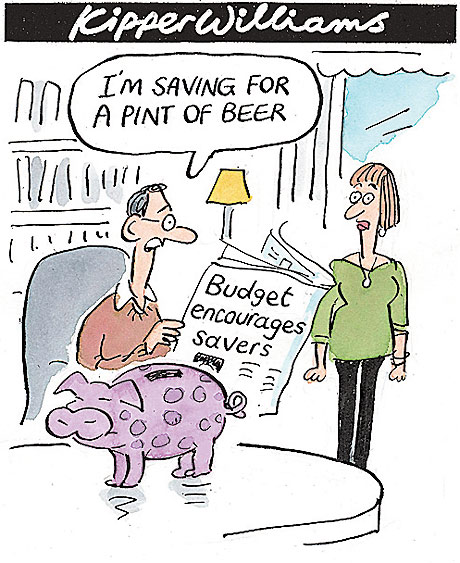 Notwithstanding the 2p reduction in beer duty in the last two budgets, our beer is still one of the most highly taxed in the EU. Politicians justify higher duty on both health and law and order grounds, although I don't recall any more mayhem and disorder on the streets in the 1970s than I see nowadays. My view is that taxation is a mechanism to pay for the costs of running the government: it should not be used as a form of social control, as it is with alcohol and cigarettes, because morality is a variable thing. What next? Heavy taxation on getting divorced to encourage families to stay together? Not as silly as it sounds: after all we have the married couple's tax allowance, an irrational bribe to stay together based on morality, not fiscal prudence. We all know that public schools get a tax break in the form of charity status, a situation based on ideology that defies any rational explanation. Unfortunately our society seems to heading in the direction of more and more of our life being dictated by politicians and lobbyists with a moral agenda. The concept of letting people do their own thing as long as you don't hurt others is being eroded by a subtle new puritanism that uses tax and bans rather than burning at the stake to impose its will.
 |
| Cartoon by Matt |
 In March 2009, I wrote: "While ordinary pub-goers have to pay excessive amounts of tax in pubs - for our own good of course - it’s always our round when our politicians hit the ale", referring to the subsidy of £5.5 million of taxpayers’ money received by the House of Commons Refreshment Department in the 2007/8 financial year.