Showing posts with label pubco. Show all posts

Tuesday, 17 September 2019

Real ale 'isn't dear enough' and it's all our fault!

The root of all evil? The Sir Henry
Segrave, a Wetherspoons in Southport
A couple of months ago I picked up the summer issue of Ale Cry, the magazine of the CAMRA Central Lancs Branch. It's an interesting mag, and its layout and presentation are much better than a few years ago when, although the articles were okay, it looked like a badly-produced college rag mag. One article grabbed my attention, 'The Price Of Your Pint Revisited', written by the editor Adrian Smith - you can read the article concerned here (on page 22).

The general thrust of the article is that we drinkers are reluctant to pay what he considers a fair price for real ale with the consequence that real ale may be "dumbed down" to save costs, or discontinued altogether. He makes some international comparisons, but comparing our beer prices with those in other countries is of little value unless you also compare average incomes, taxation levels, duty, and indeed all the many other factors that affect what we British drinkers pay.

He also has some scathing words for Wetherspoons and the vouchers that they give to CAMRA members, describing this membership benefit as CAMRA encouraging members to visit JDW pubs at the expense of traditional pubs, even though it is actually funded by Wetherspoons, not CAMRA. The value of the vouchers, £20 per year, equates to 39p per CAMRA member per week, not an amount, I would suggest, that would drive traditional pubs to close, especially as 99.7% of the UK population are not CAMRA members.

Many organisations have benefits for members provided by outside businesses; indeed, some of the membership benefits I am entitled to claim, in addition to those via CAMRA, come through my trade union, the National Trust, my railcard, my car breakdown service and even my folk club. Furthermore, there are 17 other companies that offer perks to CAMRA members, some of them in the beer and hospitality industries - but there's not a word in Ale Cry bemoaning any of those. Besides, there is absolutely nothing to stop any other pubco making similar offers.

At this point I wondered whether I was beginning to detect the anti-Wetherspoons snobbery that, regrettably, some CAMRA members are prone to, a perception reinforced by a statement in the Ale Cry article that, "Real ale on sale at £2.09 a pint is frankly ridiculous". Why? Wetherspoons are making a profit, so if they can afford to sell beer at such a price, why shouldn't they? Perhaps it's the perception of the clientele that Wetherspoons' prices are said to attract: people on benefits, parents with screaming brats running wild and pensioners drooling into their cheap meals, all of which shameful slanders - and more - I have read too many times (although not in the Ale Cry article). I consider such generalisations about Wetherspoons clientele both inaccurate and disrespectful.

CAMRA says that avoiding isolation by going to the pub is a good thing, but without Wetherspoons, many people on low incomes could rarely, if ever, afford to go out for a pint; they would certainly have no chance of paying the price for real ale that Adrian Smith thinks they should.

I've written before about the price of beer, most recently in June 2018 here. One point I have made several times is that in 1972, a pint of bitter here in the north west was around 13p or 14p. Using the Bank of England inflation calculator, I learned that 14p back then is equivalent to £1.82 in 2018. In recent years, and especially since 2010, ordinary people's incomes have definitely not increased correspondingly. In real terms, beer is nowadays markedly dearer while many people's incomes are lower. It's logical to assume this is a significant reason why drinkers are reluctant to pay more for real ale, but the Ale Cry article makes no mention if it.

A list of factors affecting pub usage, the level of beer prices in pubs and what people can afford would include (in no particular order):
  • Beer taxes that over the years have risen by more than the rate of inflation, and which are among the highest in Europe.
  • Excessive business rates (which, incidentally, are set by Whitehall, not councils).
  • Pub companies overcharging their tenants for rent, supplies (including all drinks) and building maintenance.
  • Rising costs for brewers (e.g. raw materials) and pubs (e.g. utility bills).
  • Falling beer sales overall.
  • Changes in drinking habits, with many young people preferring go to bars and clubs rather than traditional pubs.
  • More choices of places to drink, such as bars, restaurants, hotels and clubs.
  • Cheap drink in supermarkets.
  • Sophisticated home entertainment systems.
  • Austerity, leaving people with less cash and either unemployed or worried they might be.
  • The increase in insecure employment, zero hours contracts, and minimum wage jobs.
  • The smoking ban.
In the face of all this, it seems perverse and facile to criticise the drinker, and I am surprised that the editor of a drinkers' campaigning magazine does so. I did e-mail him a couple of months ago making some of these points but received no reply.

► For information, the Wetherspoons voucher scheme is currently being replaced.

Friday, 31 May 2019

Killing the goose that lays the golden eggs

The Office of National Statistics states that the average price of a pint of draught bitter in 1988 was 91p and that 30 years later in 2018 it was £3.06. We all expect prices to rise, but according to the Bank of England inflation calculator, 91p in 1988 is equivalent to £2.39 in 2018. If inflation had been the only pressure on beer prices, that's what we'd be paying nowadays.

A year ago, YouGov conducted a survey with more than 40,000 respondents and found that beer was on average around 60p dearer than what drinkers considered reasonable. This means that, not just that beer is dearer in real terms, but drinkers feel they are being overcharged for it. How did this come about?

When the big brewers sold off their huge pub estates, most were bought by pub companies, who financed their purchases by mortgaging their newly-acquired properties. The 2007 financial crash then put most pubcos into massive debt; they are however too big to fail or they'd take the lenders down with them. To service these debts, pubcos charge very high rents for pub tenancies and insist the tenants buy their supplies through them, adding mark-ups that can be as much as 100% - just for passing on the order.

Then it was the government's turn. Beer duty has during this period been pushed up by much more than inflation, notwithstanding the odd duty freeze now and then. In addition, business rates, also set by central government, are disproportionately high when compared to other businesses with comparable turnovers. Talk about killing the goose that laid the golden eggs: if pubs are driven to close, they pay no duty or rates at all.

If you ever feel your pint is dearer nowadays in real terms, you're quite correct!

This is from an article I wrote for the CAMRA column in our local papers, the Southport Visiter and Ormskirk Advertiser. Some previous write-ups are here.

Tuesday, 7 May 2019

Asset stripping through neglect

Passing this closed pub in Southport recently, the Hoghton Arms, I thought the obvious neglect gave one compelling reason why pubs are closing. Letters are missing from the name and the paintwork below the windows hasn't been touched for years. If I were looking for a pub to run, I'd just walk past this one. It wouldn't surprise me if planning permission was sought to develop the site.

Two views of the same corner on Google street view.
Slightly further away it still shows the London.
Move closer and the new houses magically appear.
I've seen this happen before. On my last visit to the London Hotel in Southport, the place had clearly not been decorated since long before the smoking ban as the ceiling was still heavily stained with nicotine, several of the light bulbs were broken and the whole place was dingy and unwelcoming. Unsurprisingly, there were only about three or four people in what was a large street corner people in a residential area, even though there wasn't another pub or bar nearby.

I e-mailed the owning company and asked about the rumour that the pub was to be closed down. I initially received nothing back but after a couple of reminders was sent a very guarded reply asking what my interest was: was I interested in buying the pub? I replied no, I was just a customer concerned about its future. I received no further response. Shortly afterwards came the inevitable announcement that the pub was unviable, although unsurprisingly they didn't mention that they had run it into the ground. A group of new houses now sit on the site.

Most pub companies are property companies and have no vested interest in maintaining their pubs, especially when they can get the equivalent of a massive lottery win by selling the land for redevelopment. Breweries were more likely to maintain their estates of pubs because they were outlets for their core product, beer, but as is well known such brewery estates are uncommon nowadays.

Even many apparently successful traditional pubs are, behind the scenes, struggling under inequitable tenancy agreements that require licensees to take responsibility for often quite major maintenance costs, as well as overcharging for the products on sale: licensees have told me about 50% to 100% mark-ups on beer as compared to the open market. Many pubs would be much more successful if they weren't tied and could buy their supplies where they wanted. Although I'm a Leftie, my understanding is that under capitalism competition is supposed be good for the economy by bringing prices down to benefit all of us - well, that's the theory we're fed. The tie ensures that pubco-owned pubs are denied even that dubious benefit.

Nothing is likely to be done because our rulers are quite happy if pubs close and we all stay at home, but people cannot be bullied into such behaviour against their will. The rise of new micropubs and bars, not tied to any company, are stepping into the breach, or even opening in areas that weren't previously served by any drinking establishments. For example, the Hillside area of Southport had no licensed premises at all until three years ago: now there are two new bars and a micropub, with two of them serving real ale (the Grasshopper and the Pines).

The down side is that we continue to lose irreplaceable traditional pubs that, if the owners had the will, could remain open. The success of various community pubs which had previously been closed by pubcos as unviable simply shows that the pubco business model is itself the problem.

I do know there are other factors in pub closures, such as excessive tax, unfair business rates, changes in how people socialise, and so on, but I have seen pubs allowed to deteriorate, often (in my opinion) quite deliberately.

Thursday, 14 March 2019

Spoons - just stirring it up?

The great hall in the North Western on Lime Street
A recent negative comment ("poor food cheap drinks") on a Facebook post about Wetherspoons got me wondering why some drinkers are so dismissive about the pub chain. I accept that Tim Martin is perfectly capable of being complete prat, particularly on those occasions when he spouts his views on issues beyond his immediate business, but if I knew the views of managing directors or CEOs of most breweries or pub companies, I'd probably find quite a lot to take issue with.

Anyone who chooses not to patronise Spoons because of Martin's strident views on leaving the EU is of course perfectly entitled to do so, but although I completely disagree with him on that issue, it won't stop me using the pubs.

Comments I've read over the years, sometimes inserted anonymously on other beer blogs, have been along the lines of:
  • Pensioners drooling into their meals.
  • Brats running wild.
  • People on benefits squandering their 'handouts'.
  • Alkies drinking from opening time.
And so on. People writing such things are clearly looking down with contempt upon some of their fellow citizens: not an admirable trait. 

I have never noticed anyone drooling into their food, beer or anything else; I regarded that kind of comment as snobby ageism. How dare older people want to go out for a drink? They should be tucked up at home with their slippers and cocoa, getting increasingly isolated and depressed - but out of sight. Any children I see in Spoons are no worse than those in other family-friendly pubs, and calling them 'brats' is just another instance of snobbery. As for people spending their benefits: first of all, how would you know? And secondly, even if they were, they're entitled to some kind of social life.

I've also read a number of times, especially recently for some reason, that CAMRA shouldn't give £20 of beer tokens to its members.  Some people seem to think that the beer tokens constitute a subsidy of Spoons by CAMRA; if so, they have got it completely wrong. The vouchers are a CAMRA membership benefit entirely paid for by Wetherspoons, and it's not the only company that provides perks - have a look here - but no one ever suggests that CAMRA should turn those other offers down. This type of whingeing is just a handy stick to beat both Spoons and CAMRA, even if it does involve getting the facts wrong, but that's indicative of the times we live in, unfortunately.

There are a number of pubs in Southport that I like to frequent, and they include traditional pubs, micropubs, and Spoons. The one I go to most is the Guest House, one of the most unaltered traditional pubs in the town centre, but on occasion I like to go to one of the town's two Spoons, the Sir Henry Segrave and the Willow Grove. I also like the magnificent North Western in Lime Street, Liverpool, and, although I don't get there very often, the Court Leet in Ormskirk. The Twelve Tellers in a former bank in Preston is also rather impressive.

Nearly ten years ago, I wrote how Southport's two Spoons outlets were a thorough disappointment. I'm pleased to say that post is completely out of date today, and a good choice of well-kept beer is available in both. I mention this to demonstrate that I am not an uncritical fan of Wetherspoons, and if I am dissatisfied, I am prepared to say so.

From an old local guide that listed every real ale outlet.
Perhaps some slightly younger Spoons detractors simply don't know how lucky they are. In the 1970s and 1980s, we would have a thought a pub like Spoons was marvellous at a time when most pubs had only one or two beers on, usually from the same brewery. My chart shows the number of real ale pubs in the whole of Southport (not just the town centre) in 1985, categorising them by how many real ales they had on. Nowadays you can get a better choice in the area around the northern end of Lord Street alone.

People are of course fully entitled to dislike like Spoons as pubs, but the nature of some of the criticisms has made me wonder whether there are other factors, such as feelings of superiority, perhaps?

In response to the comment that provoked this post, I wrote: 
I don't agree the food is poor: it's good for what you're paying. I also have no problem with cheap drinks.
Wetherspoons provides many people on restricted incomes with an opportunity to have an afternoon or a night out with a few drinks and a reasonably-priced meal, that they certainly couldn't afford in an overpriced gastro-pub.
Not everyone can afford to be as choosy as you!

Monday, 11 June 2018

What's a reasonable price for a pint?

This is from an article I wrote for the CAMRA column of the local papers. Text in italics was left out of the article as printed for space reasons.

The internet market research company YouGov asked more than 40,000 people what they thought would be a reasonable price for a pint in the pub and compared the responses to the actual prices. Unsurprisingly, the responses across the country vary as much as pub prices do. Nationally, the average price that we think is reasonable is £3.00, 60p less than the actual average price.

The biggest gap between actual price and what people thought reasonable was in Surrey, home of the dearest beer in Britain at £4.40: they thought £3.36 would be reasonable. At the other extreme, Herefordshire, where the actual average price is £3.31, people thought a reasonable price would be only 30p less. Here in Lancashire and Merseyside, the gap between actual price and what drinkers considered reasonable is 70p. 

The price of bitter in 1972 was around 13p to 14p, at least in this part of the country. This is equivalent to £1.75 to £1.88 today, using an inflation calculator. Obviously, beer costs considerably more than that today, even in places like Wetherspoons, so the price we pay now for a pint cannot be attributed to inflation alone. A major additional factor was the massive sell-off of pub tied estates after the Beer Orders of 1989.

When the big breweries sold off most of their huge pub estates, pub companies (pubcos) moved in to hoover them up. They paid for the pubs by mortgaging them to the hilt. The immense debts they acquired in this way were made much worse by the financial crash of 2008. The pubcos survived, being too big to fail – if they went under, so would the mortgage providers. 

To service their debts, pubcos told their pubs that they had to get most, if not all, their supplies through them, imposing huge mark-ups along the way. Several local licensees have told me in confidence that the mark-up on a cask of beer can be between 33% to 50% above the price on the open market. Licensees who look elsewhere for supplies risk losing their livelihood, so the cost has to be passed on to the customer.

A few pubcos such as Wetherspoons have a much more sensible business model, not saddled with gigantic debts, which is why their prices can be lower. Also, independent pubs and bars can also charge less for similar reasons, but regrettably most of our traditional pubs are now owned by pubcos.

This is adapted from one of a series of articles that I write for the CAMRA column in our local papers, the Southport Visiter and Ormskirk Advertiser. Some previous articles are here.

Wednesday, 1 February 2017

Government ignores MPs' vote on PCA job

Adjudication without credibility
is worthless
I have written several times about the pub code adjudicator, Paul Newby, including:
The issue hasn't gone away, and the House of Commons has voted to "reopen the appointment process for the PCA (pubs code adjudicator)". While the minister from the Department for Business, Energy and Industrial Strategy admitted that pubcos were "flouting the code", the solution she suggested was for the licensees affected to use the PCA. A Tory MP added that the appointment complied fully with the code of practice for ministerial appointments to public bodies.

This is missing a significant point: that such an appointment should not only be compliant with the code, it must also appear credible to the people for whom the post has been created: in this case, pub licensees. In the debate, Lib Dem MP Greg Mulholland described Newby's position as untenable, explaining that there is a real possibility that he will undermine the intentions behind the pub code. He concluded: "All the people that the British Pub Confederation is representing in cases oppose Mr Newby, have no confidence in him and he will have to go. It will happen; it depends on if we see leadership from the Government or whether this has to drag on for another six months or a year, but this will not go away."

The longer this controversy continues, the more Newby's credibility in the job will plummet. The government's position should not be determined by a refusal to admit a mistake. I can only conclude that they don't want to lose face, but the risk of that will be greater as time passes. It would more sense to cut their losses now, accede to the MPs' vote, and reopen the appointment process.

Wednesday, 30 November 2016

Compromised pub code adjudicator to keep job

They say justice is blind.
Deaf too, in this case.
wrote in June about the genuine questions over the suitability of Paul Newby for the post of pubs code adjudicator (PCA): "It is not hard to see why Newby lacks credibility among the people who would have to rely on him to adjudicate on disputes with their landlords, given that the latter are major customers of the company in which he has a big shareholding and which owes him a lot of money."

Iain Wright MP, chair of the Business, Energy and Industrial Strategy (BEIS) committee, has just sharply criticised the government for its refusal to reopen the appointment of the post, having expressed the committee's concerns about Newby's suitability to the Secretary of State for BEIS Greg Clark in July.

Clark belatedly replied to the BEIS committee this month, four months later: "The appointment process was run in accordance with the code of practice for ministerial appointments to public bodies. As part of the appointment process, the panel considered whether Paul Newby has conflicts of interest that might call into question his ability to do the job and concluded he did not." So that's all right then. Such a bland and uninformative reply could have been cobbled together in five minutes, so why did it take four months? My guest it's because Clark hoped the issue would have faded away by now.

If you want to judge this dispute for yourself, the facts of Newby's past active involvement and current financial stake in pubcos are in my previous post. Iain Wright emphasised that they are not doubting Paul Newby's personal integrity or suitable experience; rather they are saying that it's not enough to be be squeaky clean - it's essential to be perceived as such. Licensees approaching Newby for an impartial adjudication will not be reassured by Clark's curt dismissal of any valid concerns.

In my previous post, I asked whether this all might be a gigantic cock-up. I now think the answer is 'no' and am inclined to believe that pubcos were persuaded to go along with the creation of this post on the basis that the PCA would be a sympathetic appointee.

Wednesday, 16 November 2016

The Lion serves tonight

The Lion
I've received a message on Facebook last week from Colin Batho that the Lion in Moorfields, Liverpool is due to reopen. Looking at the Liverpool Echo on-line, I've just noticed that the grand reopening is today. It closed down in June following a dispute over the rent between the licencees, Sean Porter and Michael Black, and Punch Taverns. They accused Punch of reneging on a promised rent reduction; the pubco denied that such a promise had ever been made.

The Lion is an extremely attractive traditional old pub with etched glass, woodwork, tiles and a glass dome in one the rear rooms. I'm not the only one who has worried that the closure might have been permanent.

The dome
Dave Hardman, who has worked in the pub for ten years as a barman, will be taking it over. I'll pop down soon to Liverpool to see whether there is any chance of resurrecting the monthly song sessions that I've run there for six years. Apparently the nearby Cross Keys, which was also run by Sean and Michael, will be reopening soon, but I know no details of that; I'll try to find out more.

Sean and Michael have recently opened a free house, which they've renamed the Lion, on Market Street in Birkenhead; it had previously been known as Stracey’s Sports Bar and the Caledonia. I'll try to visit there soon as well.

Report in the Liverpool Echo here.

Thursday, 27 October 2016

Sidestepping the Code

In July, the Pub Code finally came into force allowing pub tenants to ask their pubco for a market rent only (MRO) deal, which would allow them to buy beer on the open market in exchange for paying a commercial rent on the premises. All well and good, except that pubcos, most of which have accrued a mountain of debt (basically because they're rubbish capitalists), are not playing ball.

One tenant reported that when he requested a change to an MRO tenancy, as is his legal right, the rent offered was double, which would have left him much worse off as the rent would have been nearly double the national average for free-of-tie rents. Punch have consistently refused to explain the figure.

Another tactic is the insist on a new contract, although it is much simpler and cheaper to vary the existing one. Thousands of pounds are then demanded in stamp duty, legal fees, and a premises licence fee, whatever that is. Other charges added to the switch to MRO mean some licensees have been expected to find nearly £200,000 up front.

It's a good job we've got the Pubs Code Adjudicator then, except that there are serious doubts about Paul Newby's impartiality (see my earlier post about him). The first referrals have arrived on his desk, but as such referrals costs £200 each plus legal costs, which can add up to thousands, licensees are not going to go down this path lightly.

Punch say they are "open to negotiation at any rent event". If they were prepared to enter negotiations in good faith, then licensees wouldn't be turning to the adjudicator. The fact that some of them are shows that being open to negotiation is by no means the same as being prepared to negotiate.

Tuesday, 6 September 2016

Unviable - who says?

The Plough in Crossens in the process
of demolition. It's now houses.
post by Paul Bailey concerning how a pub near where he lives had been saved got me thinking about how pubs are declared unviable - usually by a pub company that wants to cash in on the value of the land. Some people believe that unfettered capitalism is the way forward and that the market should determine the price of everything: they'd therefore see nothing wrong with this. If you agree with this, fine - that's your opinion - but it's not a point of view I share. Imagine that your home could be sold for much more than its current market value if it were developed as a block of flats or a convenience store; would it be right to do so? Where do we draw the line, assuming we do at all, with squeezing every last pound from property regardless of any other, non-monetary, value it may have?

In this area, we have had a number of pub closures after the pubco concerned had declared that the business was no longer viable. They are probably right when the finances are viewed through skewed prism of their highly flawed, debt-ridden business model with high rents, massive mark-ups on drinks, etc. It is not their greed or, perhaps more accurately, not just their greed: they have massive debts to service. They will never be declared bankrupt, although by any sensible measure they are in real terms; as J. Paul Getty said: "If you owe the bank $100 that's your problem. If you owe the bank $100 million, that's the bank's problem."

Two pubs in this area have suffered declines with lengthy closures punctuated with short periods of being open while some temporary manager takes over, or some unfortunate mug is robbed of their life savings by unrealistic business projections - something I have heard from a number of licensees with whom I've chatted over the years. Both have been sold on by their pubco, in one case to a family, and another to small chain of pubs in the Merseyside area. Free of the tie, they seem to be doing all right. In one, I was told that the pub could not survive as part of the big pubco that had previously owned it, but it was doing quite well as a true free house. The prices were lower too.

I am fully aware that there are many factors, of which pubco mismanagement is merely one, behind the decline in pub use, but if the viability of a pub is assessed by the people who want to sell the site for redevelopment and thus chip a tiny amount off their mountain of debt, I think it's reasonable to view their calculations with some scepticism.

It must not be forgotten that the pubco business model is one that does best by failure: they hit the jackpot when a former pub is redeveloped, whereas it may a long slow process to gain a small amount of profit from a pub which, by their lights, is on the cusp on unviability. The big pubcos, Wetherspoons excepted, are property companies, not beer businesses. Their priorities are determined accordingly. 

The new Pubs Code has come into force, giving tenants more rights and greater protection when dealing with large pub companies that own tied pubs. I doubt that it's a silver bullet, but I hope it provides some help.

Wednesday, 22 June 2016

Lion Tavern closed

A detail in one of the Lion's windows
I was quite shocked to learn that the Lion Tavern and the Cross Keys in Liverpool have been closed as a result of a dispute with Punch Taverns over the rent, according to the Liverpool Echo. Both are run by Sean Porter and Michael Black. The Echo's report of the dispute is here.

The Lion particularly is architecturally interesting with old tiles, wood panels, mosaic floors, a glass-domed ceiling in one room and etched windows; it is listed in CAMRA's National Inventory.

Sean used to work in the Mason's in Southport and asked me six years ago to start an informal song session in the Lion like the one in the Mason's that I usually attended. They have had to cancel their advert in Ale & Hearty, the Southport & West Lancs CAMRA magazine, after I'd just spent some time redesigning it - not that that is the main issue here. At the time of writing it's uncertain whether the pub will reopen with Sean and Michael, or with someone else in charge.

From a personal point of view, I am concerned about the future of my monthly music session, but more importantly, I hope that Sean and Michael are able to resolve their differences with Punch and stay on. The Lion has always struck me as well-run with eight real ales and a couple of real ciders since before I began my singarounds in 2010; the beers have always been in good condition, with some interesting changing guests.

Fingers crossed.

This is the revised advert. I hope it can be used at some point!

Friday, 10 June 2016

Who will adjudicate the adjudicator?

It doesn't look as though the anger over the appointment of Paul Newby to the new post of Pubs Code Adjudicator (PCA) by the BIS secretary Sajid Javid is likely to dissipate soon. Newby has conceded that he has worked mainly for Enterprise, Punch and Marstons over the last five years, but either does not, or chooses not to, understand that his new role could bring him into conflict with his former paymasters. However, this matter goes further than that.

Newby was a director of Fleurets, which describes itself as a 'UK business property valuers and surveyors specialising in pubs, hotels, restaurants, licensed property and business properties for sale and to let.' He resigned as director a couple of months ago, but still owns an 11.52% stake in the company. The company hasn't been doing well in recent years and the directors and their spouses had to make secured loans to it of £2.5 million, with further unsecured loans of more than £600,000. We don't know the size of Newby's loan, but it is clear that he still has a major financial interest in Fleurets' survival.

Pub companies pay Fleurets more than a £1 million a year for its services, and should Newby decide to adjudicate against them, they may well take their custom elsewhere; Fleurets would then collapse, taking his investment with it. LibDem MP Greg Mulholland's assertions that Newby would not be independent as PCA have been branded a 'disgraceful set of slurs' by BIS minister Anna Soubry, but her mock-indignant huffing and puffing does not address the fact that Newby stands to lose a lot of his own money if pubcos decide to punish his company for any adverse decisions he might make in his PCA role.

It is not hard to see why Newby lacks credibility among the people who would have to rely on him to adjudicate on disputes with their landlords, given that the latter are major customers of the company in which he has a big shareholding and which owes him a lot of money. Is this a gigantic cock-up? Or were pubcos persuaded to accept the creation of the Pubs Code on the basis that the adjudicator would be someone whom Sir Humphrey Appleby would describe as 'sound'? Either way, if the government is serious about the code, it needs to back down and appoint another, more obviously independent, person to the job.

The only surprising thing about this whole affair is how the government has walked blindly into a controversy that was both foreseeable and avoidable.

Main sources: Private Eye and The Morning Advertiser.

Friday, 22 January 2016

The price ain't right!

There are some interesting statistics in this article in the Morning Advertiser on a variety of beer-related issues. One set of stats covers the fact that lager sales are declining in favour of ales and craft beers, about which they state:

While some Brits are losing their love of lager, there is a rise in styles such as IPAs (Indian pale ales) in particular.
  • One fifth of UK drinkers are not willing to pay more than £2.99 for a pint. 
  • Three in 10 (29%) beer drinkers are prepared to pay more than £4 per pint.
  • In London, 27% are willing to pay more than £4.50. 
  • More than one quarter (27%) of Brits drink ale or bitter.
  • One in five (20%) drink any type of craft beer.
I found the first point of particular interest. I have long felt that £3 is particularly difficult psychological barrier for many drinkers, and I have wondered whether that's the reason why my local has kept its cask ales below that figure for some time now, except for beers over 5%. I'll pay £2.95 without a thought, but if the cost is over £3, I'll always notice it. It won't stop me paying, of course, but if the price is more than £3 a pint for ordinary beers, I tend to feel it's dear.

One drinker in five is a sizeable proportion of beer drinkers, and this stat suggests to me that it may be a cut-off point for some who may feel driven to join the join the supermarket set. This point is reinforced by the fact that, although lager sales are suffering more than cask ale, the overall consumption of beer in pubs is in slow decline: the market is shrinking.

Pub owners, such as brewers and pub companies who tend to have little compunction about pushing up the prices they charge, should take this psychological price barrier into account, or risk biting the hand that feeds them.

On a related issue, I note that CAMRA is campaigning for another cut in beer duty; let's hope the government heeds the call.

Monday, 12 October 2015

Will the National Living Wage close pubs?

I've just read an article in the Morning Advertiser by William Lees-Jones of the Middleton brewery, JW Lees, suggesting that the National Living Wage (currently £9.15 in London and £7.85 elsewhere) will close pubs. I don't usually take much notice of economic apocalypse predicted by capitalist companies when they are forced to implement social or welfare measures, or - as I prefer to think of it - are required to face up to their social responsibilities, seeing that the doom and gloom they anticipate rarely materialises. Is this situation any different?

I think it might well be. The gradual introduction of the Living Wage over the next five years is coupled with immediate cuts in tax credits. I have long thought that the state shouldn't be subsidising low wages, currently with tax credits, and previously with Family Income Supplement and then Family Credit. However, it has been the policy of both Tory and Labour governments in the last 35 to 40 years to cultivate a low wage economy to make us "more competitive". It's a typical British response: countries like Germany and Japan modernised their industries to improve the products and make them more attractive to customers. We just tried to cut costs. That is why in the 1970s British Leyland was selling mostly unattractive-looking cars with 1950s engines. The same applied to the brewing industry: the 1970s was a terrible time for beer as companies tried to get us to drink mass produced, low quality national brands.

Our motor industry is now mostly foreign owned, but our brewing situation has - against the flow of the tide of British industry - improved beyond recognition, although that has little to do with the industry as it was. The Beer Orders of 1989 liberated brewing by causing the national brewers to shed their massive tied estates, thereby creating a bigger market for small new brewers. Unfortunately, they also led to the parlous situation that many of our pubs are now in, the reasons for which I've covered many times previously, although the huge debts of pub companies must take much of the blame.

The government is transferring responsibility for dealing with low wages from itself to employers. In principle I agree with this, but their motive is not any concern for employees, but simply to save money. This is demonstrated by the gap between the ending of tax credits and the full implementation of the Living Wage, which will undoubtedly cause hardship. You cannot overturn decades of government policy relating to a low age economy within a single parliament: the more quickly you introduce major changes, the higher the chance of unintended consequences. Just as the removal of tax credits without any immediate replacement may drive many workers into further poverty, the requirement to pay the Living Wage may drive pubs that are just about holding on into deficit. Consequently, I think William Lees-Jones may just have a point to some extent, although I feel that his pronouncements are still partly derived from the usual business habit of crying wolf about increased costs.

An increased level of pub closures is not inevitable: the industry's call for a lower level of VAT for the hospitality industry and cuts in alcohol duty could help pubs deal with the extra cost of the Living Wage, but I see no sign of any of that happening. The government's strategy is high risk, not just to pubs. Time will show how risky, but some casualties do seem quite likely. Regrettably, this may include some pubs.

Thursday, 8 October 2015

Suburban pubs most at risk

A partly demolished Plough in Southport
Suburban pubs face a greater chance of closure than rural or town and city centre pubs, according to CAMRA. During each week of the first half of 2015, seventeen pubs were lost suburban areas, nine in the countryside and three on the High Street. This follows separate research that showed there has been a 4.4% decline in wet-led outlets over the last year, higher than the the overall figure.

This is borne out by our experience locally: suburban pubs we have lost in Southport include The Herald, The Portland, the Shakespeare, the London and the Plough - all in predominantly residential areas. A CAMRA spokesperson said: "Suburban pubs are classic street-corner, wet-led pubs and community locals that have been an integral part of British culture for hundreds of years. Unfortunately though, as drinking habits change and property prices rise, they are being hit the worst."

I think that's true, but it doesn't tell the whole story. Debt-ridden pub companies are reluctant to invest in pubs that may be only moderately profitable. Older suburban pubs often sit on large sites in areas that already residential in character; redevelopment into accommodation must be very tempting for the owners. In this way, a pub that isn't doing a great deal for a pub company can suddenly become a lottery win.

It's my view that the pub companies sometimes help this process along by neglecting their pubs so that they become dingy and uninviting, thus driving customers away and into the town centre pubs, which are generally better maintained (three of the pubs named above were very close to the town centre anyway). The pub is then deemed unviable and closed.

The call by industry organisations for further cuts in beer duty, business rates and a hospitality rate of VAT. These might help, but they won't do anything to sort out the debt mountain the pubco industry is stuck with. Cashing in their assets will therefore remain a preferable alternative to continuing investment and moderate returns.

Monday, 28 September 2015

A pint too far?

I e-mailed the CAMRA Marketing Team about the concerns I had about the Campaign's promotion of Punch's free pint offer for Cask Ale Week (see previous post of 26 September), seeing that they had just agreed to sell 158 pubs, including the Roscoe Head in Liverpool, to a property developer. I'm not really convinced by their reply, but I'll let you judge for yourself. Here it is in full:

Thank you for your feedback, all comments received from our members are appreciated and considered.

Punch have played an active part in Cask Ale Week, a UK wide event championing real ale. This promotion is supporting the Punch pub leaseholders by driving CAMRA members into their pubs during Cask Ale Week, these are the very pubs CAMRA has been campaigning to help over the last few years in regards to the tied pub issue. Whilst some of CAMRA's aims and activities conflict with that of Punch's, we encourage a healthy dialogue between us when goals align. Keeping the lines of communication open also allows us to raise and discuss issues when they do not.

CAMRA is also committed to four Key Campaigns..... one is to encourage more people into pubs and another to drink a range of real ales. This scheme can help with both of these Key Campaigns.

I hope this explains the thinking behind our relationship with Punch and the associated Cask Ale Week promotion.

CAMRA Marketing team

Keeping lines of communication open is one thing; acting as their unofficial promoter is quite another. I have questioned the value of CAMRA's May Is Mild Month campaign. Perhaps similar arguments apply to Cask Ale Week if promoting it means we have to compromise basic principles of saving real ale and real pubs just so members with a smart phone can get a free pint in a Punch pub.

Saturday, 26 September 2015

CAMRA accepts 30 pieces of silver

It's Cask Ale Week, apparently. I can't say I would have noticed, except that I received a gushing e-mail from CAMRA promoting it. They point out that the 'week' runs from 24 September to 4 October, helpfully explaining that this is 10 days, although it's 11 by my reckoning.

There's a free pint promotion from Punch Taverns, although you have to have an internet enabled smartphone to access the offer. That doesn't bother me too much. The fact that CAMRA is promoting a Punch Taverns offer does.

Last month Punch agreed to sell 158 pubs to New River, a property company with a record of converting pubs to other uses. This sale included the Roscoe Head in Liverpool, one of only five pubs in every Good Beer Guide, and the only one north of Cambridge. I've written about this issue and the local campaign on 31 August, 6 September, and 13 September.

My question is: why is CAMRA promoting an offer by a pub company that is no real friend of the Campaign, whose record with pubs is scarcely exemplary and who has put a cherished local at risk? It's a punch in the face for local campaigners who are trying to prevent or limit the damage this business is causing.

Monday, 31 August 2015

Two cheers - Liverpool's Roscoe Head saved

The Roscoe Head's entry in the 1974 Good Beer Guide.
Descriptions were very brief in those days!
While I was in Whitby, I learnt that the Roscoe Head in Roscoe Street, Liverpool, had been sold by Punch Taverns to property company New River and was at risk of redevelopment. It is an attractive little local near the city centre with a tiny snug on the left as you enter, two lounges and a drinking area by the bar. There are six hand pumps serving five changing guest beers mostly from small breweries, plus Tetley Bitter. It is also one of only five pubs that have been in every edition of the CAMRA Good Beer Guide.

New River's response is that existing leases are legally binding, and the Roscoe's runs to 2021. The licensee, Carol Ross, is obviously relieved that in the short term she is okay, but is worried what may happen when the lease expires. She had hoped to benefit from the Market Rent Only option that was recently agreed by parliament, but in order to qualify, the pub has to be part of an estate of at least 500 pubs, and New River has fewer than 300. As she says, she will now have to keep on paying over the odds. The sale was particularly upsetting as she had offered to buy the pub on several occasions, but was refused, and she wasn't offered first refusal when this sale took place. She is particularly bitter because, although her family have run the pub since 1983, she feels she has no rights.

The Roscoe Head (picture borrowed
from pub website)
She is right to be concerned: New River is primarily involved in the retail sector, and although it has bought quite a few pubs, if the potential proceeds of redevelopment exceed the profitability of any pub, the days of that pub would almost certainly be numbered. If the economy improves sufficiently to push up the price of land and make redevelopment and construction more profitable, then ironically the upturn, which might otherwise help pubs survive, may put some of them at risk. This is one of the unforseen long-term consequences of the Beer Orders that led to whole pub estates being bought by the property companies that we call pubcos.

I understand that the CAMRA Liverpool Branch is applying to have the Roscoe Head registered as an Asset of Community Value (AVC), whereby planning permission is required to change a building's use or to demolish it. Let's hope they succeed.

P.S. 1 September: here is a petition calling on Liverpool City Council to list the pub as an AVC.

Monday, 14 July 2014

Long Spoon

The CMIC logo
Twenty five years ago, CAMRA set up the CAMRA Investment Club for members who wished to put their money into a portfolio of shares in the brewing industry. I very strongly disagreed with this at the time on the grounds that it would blur the distinction between the Campaign and the companies it was campaigning about, but unfortunately some CAMRA people have the political awareness of an empty lager glass. It still exists today, renamed the CAMRA Members' Investment Club (CMIC) in an attempt to put it at arm's length from the parent organisation; they no longer use the CAMRA logo for the same reason.

CMIC has been criticised recently for owning shares in pub companies (pubcos) such as Punch and Enterprise, who are widely regarded as one of the main causes of the problems pubs are currently facing. At the CAMRA AGM, the National Executive was accused of being far too cosy with the pubcos, and urged to take a more radical stance against them - in other words, campaign against them, as in the first word of the organisations' name.

The argument for holding the shares is that it entitles CMIC to attend the pubco AGMs. That's not much of a defence, especially as I've yet to hear of a single campaigning achievement resulting from attending. In my view, holding the shares can be interpreted as endorsement by CAMRA of the pubcos, even though I know that was never the intention; the trouble is you can't dictate how other people construe your actions. It would help if CMIC renamed itself something like the Real Ale Drinkers Investment Club, because so far the attempts to put some distance between it and the Campaign haven't really worked. To be fair to CMIC, they've said they will sell the pubco shares if CAMRA asked them to. So it's up to CAMRA, which should bear in mind what they say about he who sups with the devil.

Thursday, 3 July 2014

No Silver Spoons for Guinness

Guinness-free (not free Guinness)
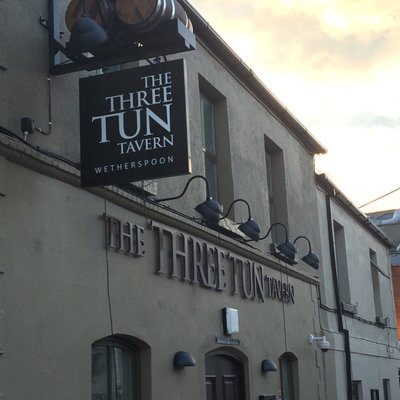
JD Wetherspoons is opening its first pub in the Irish Republic next Tuesday: the Three Tun Tavern in Blackrock, County Dublin. Because of a dispute between Diageo, owners of the Guinness brand, and Wetherspoons over price, they will not be selling Guinness, but will stock Murphy’s and Beamish instead at €3.95 (£3.15) a pint.

“We like to sell our drink to customers at a certain price and the price that Diageo wanted us to sell the product at was too high,” a spokesman for the pub company said this week. The wording here is significant, as it makes clear that Diageo wanted to dictate the price charged by JDW (so much for the free market economy that's supposed to benefit us consumers). I suppose that if you do have such a massive market share with almost monopolistic powers to dictate prices, you don't want one pub to sell sell your product significantly cheaper in case customers begin to question your profit margins everywhere else. Diageo claims its pricing is competitive, but its actions with JDW suggest that it is anything but. They duck out of further explanation by citing commercial confidentiality, the usual method of closing down discussion.

Other Diageo brands the Three Tun Tavern will not be selling include Smirnoff vodka, Bushmills whiskey and Baileys Irish cream liqueur, but it will stock craft beers from Eight Degrees Brewing, including Howling Gale, Knockmealdown Porter and Barefoot Bohemian Pilsner. Cask will be represented by two Adnams beers, Hobgoblin and a guest ale from local Irish brewers. The presence of Tetley Smoothflow, also at €3.95 a pint, is puzzling.

As usual, JDW has linked the pub to local history by reviving the name of a former eighteenth century tavern which had been "kept by one Bishop, a worthy host and was renowned for its good cheer" and, according to the Irish Times, by including "a reading room, with 'panelled ceiling and vintage books dedicated to Blackrock’s most famous author James Joyce.'"

I've read several reports about how shocking the lack of Guinness will be to the average Irish drinker, and while I understand the predominance of Guinness in the Irish beer market (one third of all pints sold), I can't help wondering whether there is a bit of stereotyping going on there. JDW has a further site lined up in Cork and is seeking others: will Diageo change its mind as Spoons expands, or will Irish drinkers anxious for a reasonably-priced pint simply find that they can do without Guinness? I'm rather hoping for the latter.

Having just posted this, I've noticed that Curmudgeon has written on the same subject, but with quite a different approach.